Marconi Station, Cape Cod

Posted In Beach of the Month
Dec
1

By Joe Kelley, University of Maine, Department of Earth Sciences

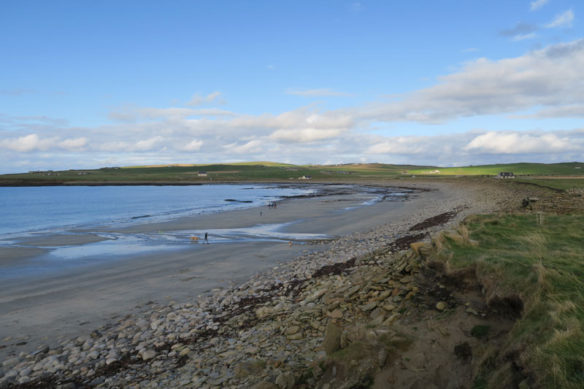
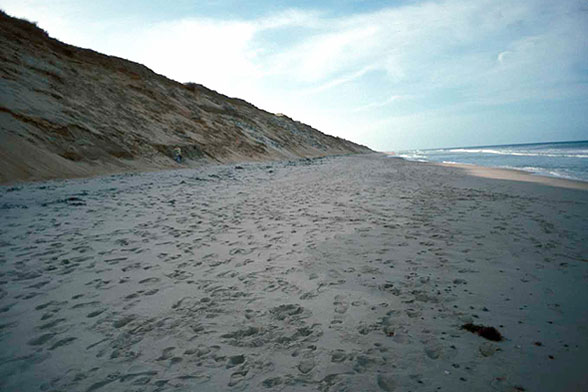
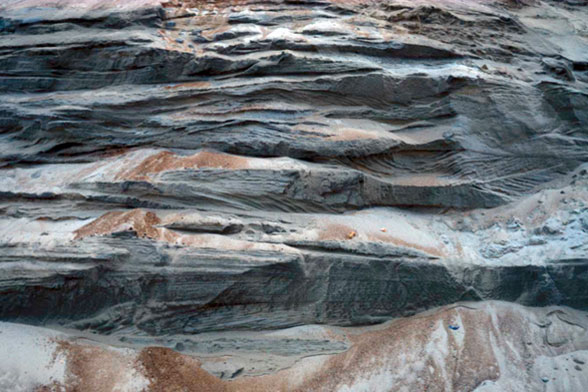
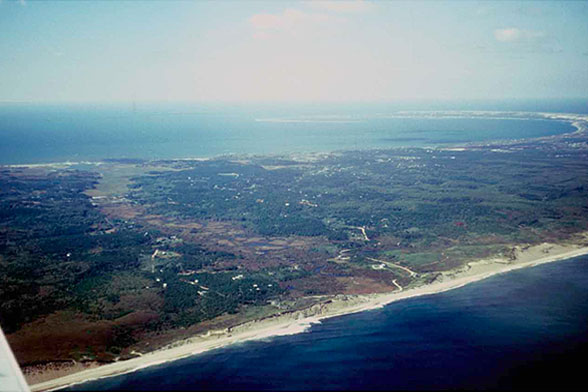
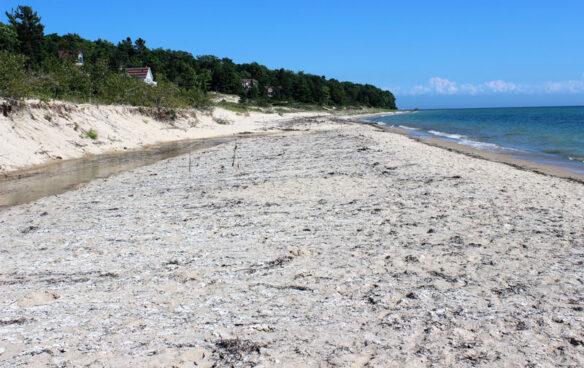
As the Ice Age began to wan, retreating ice backed northward from Cape Cod in northeastern North America. Melt water from one part of the ice poured into the temporary lake in what-is-now Cape Cod Bay. The lake was deep and the twelve meter bluffs of sand and gravel that form Outer Cape Cod are river deposits from that time.

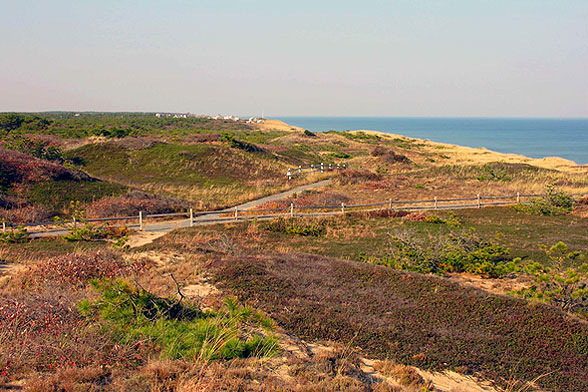
Today these great bluffs of sand are eroding at about 1 m/yr, but as they do, they supply sand and gravel to the magnificent beaches of the Outer Cape, as well as to Provincetown in the north and Chatham in the south. One can walk for tens of kilometers here with a huge cliff of sand on one side and the open Atlantic Ocean on the other. The desolation and isolation of this area is what brought Henry David Thoreau to visit and write of Cape Cod on 4 occasions. Others have followed for the same reasons, including Henry Beston who wrote of his stay in “The Outermost House: A Year of Life on the Great Beach of Cape Cod”. He came to build a shack and stay for two weeks, but so loved it that he remained for a whole year.

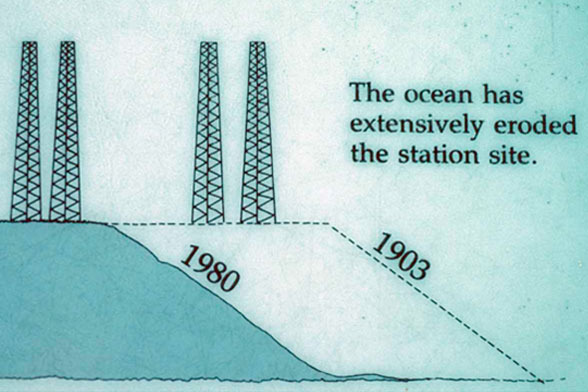
A man with different interests visited in the early 20th Century. Guglielmo Marconi sought Outer Cape Cod to erect one of his wireless transmitter stations. It was from here that the first wireless transmission was sent from the United States to England in 1903. Marconi set the station back from the obviously eroding bluffs, but time and the sea have marched on. In 1993, I visited Marconi Station and saw only the last and most landward concrete footing left from the station. It is gone now, but the beach and the bluff and the desolation remain…at least in the Park. Just to the north of Marconi Station, a community of houses face the same fate as Marconi’s wireless station. But, the continuous loss of the upland to erosion feeds sand into one of the most magnificent beaches in North America; long may it erode!
Related Posts

  • No Related Posts

Tags: , ,

Post comment

More / Beach Of The Month

Morris Island Lighthouse & the Moving Beach

mef-bom-2012-02-584

February 1st, 2012

Morris Island Lighthouse is now located over 1,500 feet out to sea on a sand shoal surrounded by a small seawall. The relatively deep 35-foot foundation of the spindle has allowed it to continue standing as the land moved out from under it. Originally constructed a quarter-mile behind the beach, the lighthouse has survived storms, rising sea level, and barrier island migration since 1876.

Read More

Jurmala Beach, Latvia

jurmala-bom-2012-01-584

January 1st, 2012

Situated on the Baltic Sea coast of Latvia, Jurmala Beach runs unbroken for over 30km along the Gulf of Riga. The beach is frozen and snow-covered in winter but in summer is a popular bathing area.

Read More

Cabanas Velhas, Algarve, Portugal

bom-2011-12-584

December 1st, 2011

Cabanas Velhas, meaning old huts, is a small embayed beach located in the southern Algarve, about 20 km east of Cape St Vincent. Composed of pre-Ordovician shale and greywacke cliffs in the west and Jurassic to Miocene limestone and marlstone cliffs in the south, this rocky shoreline is punctuated by several embayed or pocket beaches.

Read More

Charleston’s vulnerable future, through the eyes of an artist

charleston-mef-1

November 1st, 2011

Artist Mary Edna Fraser lives on an intertidal creek in Charleston, South Carolina. Although having depicted coastal regions around the world, it is this landscape that she knows best. Much of the city of Charleston lies at about eight feet above sea level and when high tide combines with a little rain, flooding is rampant all over the city.

Read More

Caminada Headland, Louisiana

bom-2011-10-louisiana

October 1st, 2011

Caminada Headland is a 22.5 km (14 mile) long beach (part of which is called Elmer’s Island) that projects out in to the Gulf of Mexico from the central Mississippi River Delta. This undeveloped beach was once an unbroken stretch of fine sand with extraordinary fishing and bird-watching opportunities. The birds and fish remain, but unfortunately hurricanes have breached the beach in many places.

Read More

Jekyll Island, Georgia

jekill-5

September 1st, 2011

Jekyll Island is a 12-kilometer long ark meeting the Atlantic Ocean as part of the Georgia coastline, southeastern US. The island is an exquisite exemplar of coastal processes, both geological and human-influenced. By Blair and Dawn Witherington.

Read More

Colombian Pacific Beaches at the Mouth of Bahia de Buenaventura

colombia-8-feature

August 1st, 2011

Among the world’s most remote beaches are those that line the 62 barrier islands of Colombia’s Pacific Coast. Only two roads lead over the Andes to access points from which the islands and their few, very small, subsistence coastal villages can be reached by boat. By William J. Neal and Orrin H. Pilkey

Read More

South West National Park, Tasmania

ja-tasmania-feature

June 1st, 2011

Have you ever dreamed of a place as a child that you always wanted visit? I was lucky enough to visit South West National Park in Tasmania, chartering the South and West coast by boat for the annual South West Marine Debris Cleanup. By Johnny Abegg.

Read More

Archive / Beach Of The Month