The black marketeers stealing Indonesia’s islands by the boat-load

Posted In News, Sand Mining
Mar
23

By Richard Lloyd Parry, The Times.

For the people of Sebesi Island, who spend their lives next to the world’s biggest natural time bomb, it seemed to be an offer that they could not refuse.

A businessman from the Indonesian mainland landed one day with a remarkable proposal: to make safe their deadly neighbour, the notorious volcano island of Krakatoa, hulking in the sea a few miles across the water.

When Krakatoa exploded in 1883 36,000 people died and the dust thrown up by the eruption lowered temperatures and darkened skies across the globe.

So the fishermen welcomed the offer of trenches to channel the lava and reduce the danger of the next explosion. However, when the boats arrived and the work began, they realised with anger that the kindly businessman was not renovating Krakatoa. He was stealing it.

“There was a huge barge, the kind you use to carry coal, and it was pumping up the sand through pipes,” said Waiso, an environmental activist who investigated the activity. “This is a national park and a Unesco World Heritage Site and you’re not allowed to touch it. The local people rely on the fishing and the income from tourism, and here they were taking Krakatoa away.” And Krakatoa is just one case among thousands.

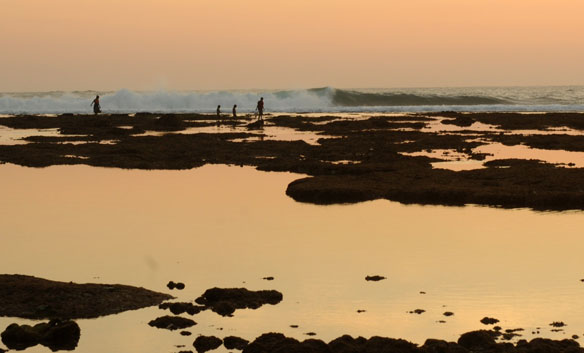
With more than 17,000 islands — from the jungly immensities of Borneo and Sumatra to unnamed rocks jutting out of the sea — you might think that Indonesia would not mind if a few of them went missing. But the South-East Asian nation is fighting a losing battle against black marketeers who are, literally, making off with its territory by the boat-load.

Sea reclamation projects in China, Thailand, Hong Kong and Singapore are driving a black market in Indonesia’s abundant supplies of soil, sand and gravel. In 2007 Indonesia banned the export of its sand and soil and threatened a shoot on sight policy against foreign sand pirates and gravel bandits. But, thanks to corrupt local officials who sign off on permits and turn a blind eye to where the material ends up, the smugglers are winning.

Since 2005 at least 24 small islands have disappeared as a result of erosion caused by sand mining. Even where they remain above the waves, the mining process clouds and muddies the sea, devastating fish populations and destroying livelihoods.

“The small islands don’t have large populations but their function in the ecosystem is very important,” said Riza Damanik, of the People’s Coalition for Justice in Fisheries. “In the Riau Islands the fishermen have lost 80 per cent of their income as a result of sand mining.”

Because the trade is illegal, an accurate accounting of how much material is being removed is difficult. Before the ban, however, sand miners might have removed 300,000 tonnes a month from a single island. “I’m sure that the amount of material removed altogether is bigger than the volume destroyed by the Krakatoa explosion,” Mr Riza said.

The eruption of Krakatoa ripped the island to pieces, leaving only fragments of the original landmass but, 127 years later, it is once again a highly active and unpredictable volcano. In the late 1920s a new peak, Anak Krakatau, or Child of Krakatoa, rose out of the sea and has climbed to more than 300m (1,000ft) at a rate of about a centimetre a day.

Since 2007 it has had periods of intense activity when lava and ash have spewed from its crater. But for local people it is a crucial source of income from the tuna, snapper and lobster that live there and the few thousand intrepid tourists who visit every year, as well as being a site of religious reverence.

A legendary prince named Syech Dapur is said to watch over the volcano and protect the people of neighbouring Sebesi, who were very gratified when the sand mining operation began to go wrong.

The pump kept breaking down; a worker was injured when his arm was sucked into a pipe; and after the fishermen’s observations of the illegal activity were reported in the media the smugglers slipped quietly away.

“The spirit of the island was angry with them,” said Iman Faisil, a local tour guide with a smile. “And we are angry too. If they come back we will make a human shield. We will burn their boats. This island does not belong to them; it belongs to all the world.”

Original Article

Related Posts

Tags: ,

Post comment

Sand Mining

You can make a difference and help save our beaches

Learn simple things that you can do to help protect beaches starting with simply educating others about the beach thereby helping us celebrate the beauty of the world’s beaches.


Join our campaign!

Sign the petition to end global sand mining.


  • Sand Mining Resources

  • More / Sand Mining

    Mining Black Sand, Lingayen, Philippines

    black-sand-beach-mining

    February 6th, 2012

    The black sand of coastal villages facing the Lingayen Gulf, Philippines, is being mined for magnetite, a highly-valuable mineral used by industrial companies. The once pristine beaches are now destroyed and coastal erosion alarms residents.

    Read More

    Singapore Raises Sea Defences Against Tide of Climate Change

    artificial-beach-singapore

    January 27th, 2012

    A 15-km (10 mile) stretch of crisp white beach is one of the key battlegrounds in Singapore’s campaign to defend its “hard-won” territory against rising sea levels linked to climate change…

    Read More

    Australia’s Government Plans To Increase Sand Dredging In Great Barrier Of Reef Area

    coeur-barriere-de-corail-australie

    January 11th, 2012

    Figures obtained through Senate Estimates reveal more than 112 million cubic metres – or 65 Melbourne Cricket Grounds – are proposed to be dredged from the Great Barrier Reef​ World Heritage area, with 52 million cubic metres already approved by the Federal Government.

    Read More

    Tatai River Sand Dredging Resumes, Cambodia

    sand-dreging-operation-cambodia

    December 30th, 2011

    In October Ly Yong Phat’s LYP Group had respected an agreement to stop sand dredging on the Tatai River in Koh Kong province by mid-October. But rather than respecting the written agreement from July 16, LYP had simply subcontracted out to another company to keep on dredging sand.

    Read More

    Vietnam: Police Takes Action Against Illegal Sand Dredging

    vietnam-south

    December 30th, 2011

    Bien Hoa City Police and the waterway traffic police in the southern province of Dong Nai, gave chase to nine boats seen illegally dredging sand.

    Read More

    EPA Implicates Fracking In Pollution

    fracking-sand

    December 8th, 2011

    The U.S. Environmental Protection Agency announced Thursday for the first time that fracking, a controversial method of improving the productivity of oil and gas wells, may be to blame for causing groundwater pollution.

    Read More

    Fishing Community Against Mining Sea For Sand, India

    fisherman-indo

    December 5th, 2011

    Fishing community in the Kerala state, under the banner of the National Fishworkers Forum, has opposed finance minister K M Mani’s suggestion to mine sea sand for use in local construction, and sand exportation, mainly to Singapore.

    Read More

    Chinese Boat Seized Over Illegal Sand Mining In Kinmen, Taiwan

    hong-kong-sand-barge

    December 5th, 2011

    Coastguards have arrested the captain of a chinese sand dredger illegally dredging sand in Kinmen waters. So far it is the fourth chinese boat arrested for attempting to steal sand from around the island.

    Read More

    Archive / Sand Mining