Sand mining ban for North Stradbroke Island, Australia

By Anna Caldwell, Greg Stolz and Brian Williams, The Courrier, June 20th 2010
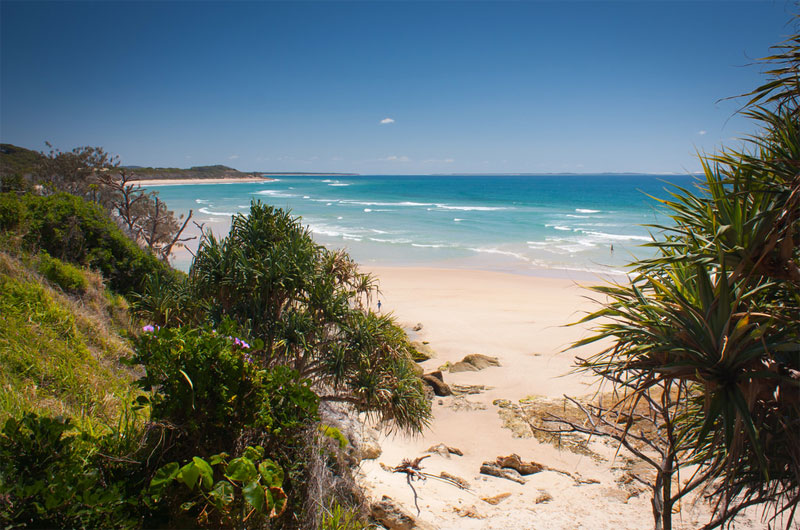
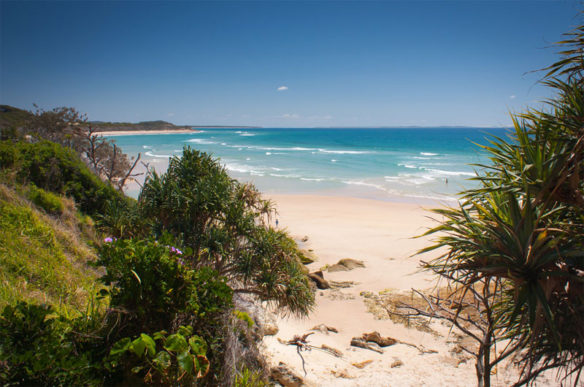
The ancient dunes of North Stradbroke Island will be saved under a bold new plan to phase out sand mining and convert the ecosensitive tourist playground to a national park.
Premier of Queensland, Anna Bligh, just announced that the Government will progressively halt sand mining on North Stradbroke Island by 2027.
After 50 years of mining, 80 per cent of the island will eventually be converted to national park, with 50 per cent of it to be declared within the next 18 months.
The existing 30 mining leases will be phased out by 2027, with the Government closing the door on any future lease renewal applications from today.
But one lease, at the giant Enterprise mine, will be renewed because its application was lodged before yesterday’s policy announcement.
The new plan will give formal native title recognition over much of the island to the Quandamooka people from 2011, involving access to important parts of the island, some land transfer and joint management of national park areas of the island.
Environment Minister Kate Jones, who came out of maternity leave briefly for the announcement, said the only areas outside the national park allocation would be existing townships, a proposed recreation precinct and land set aside under native title.
About 50 million tonnes of sand are mined on the island each year, producing 500,000 tonnes of minerals.
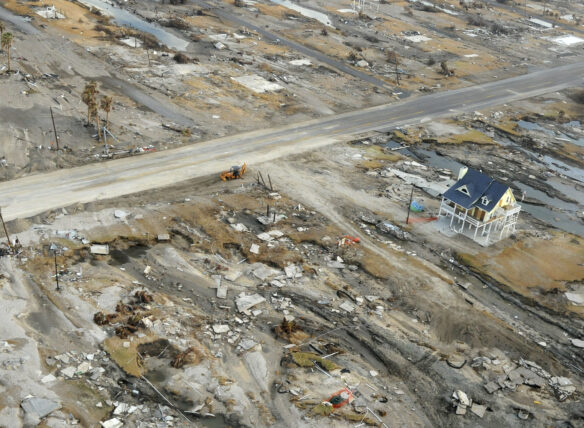
Pictures in The Courier-Mail last year revealed how excessive sand mining had left much of the island resembling a barren moonscape.
Premier Anna Bligh said a major rehabilitation project was planned, with mining companies expected to contribute.
Mining companies are predicting up to 650 job losses, with Unimin spokesman Paul Smith saying the plan will siphon $130 million in economic benefits from the island.
Ms Bligh said the long timeline for the mining phase-out gave companies short term certainty.
Despite the Government pledging not to renew expired leases or consider new ones, a spokesman for Ms Jones said the Enterprise lease was a “special case”. “Given that it is a fully operational mine linked to about 100 jobs, it is likely we will renew,” the spokesman said.
Friends of Stradbroke Island president Sue Ellen Carew welcomed the Government’s announcement but she said the Enterprise mine should be closed too. “If this lease is renewed, it means the public, the environmental movement and the indigenous community have been conned,” she said.
Green jobs to Replace Sand Mining Work in Stradbroke Island
By Courtney Trenwith, in eco-business.
Hundreds of mining jobs set to disappear as the industry is wound up on North Stradbroke Island will be replaced with green positions, Premier Anna Bligh claims.
Ms Bligh announced on Sunday, up to 80 per cent of the huge sand island off Brisbane would be declared a national park and no new mining leases would be signed.
The move to phase out the 50-year-old industry over the next 17 years spells the end of hundreds of mining jobs.
However, Ms Bligh said they would be replaced with at least 400 green positions.
Although she refused to guarantee no job would be lost.
“We expect over time, frankly, to see more jobs on North Stradbroke Island,” Ms Bligh said.
“We will see more people working in the national park, we will see new opportunities for eco-tourism resorts, the sort of things that we’ve seen at Fraser Island.”
“We know that there are jobs involved. We know that the island economy has a strong relationship with the mining companies and that’s why none of this will happen overnight.”
Tourism on Queensland’s largest island, Fraser Island, has boomed since sand mining there was banned in 1976, and logging stopped in 1991.
Climate Change and Sustainability Minister Kate Jones said green jobs were already outnumbering mining positions on North Stradbroke Island.
“The latest ABS [Australian Bureau of Statistics] data shows that in 2006, for the first time, tourism and eco-tourism jobs, based on the fantastic environment we have here, have outstripped mining jobs on the island,” Ms Jones said.
“This is the future of North Stradbroke Island.”
Pressure to create new jobs on the island will likely ramp up in 2015 when the first of the five operating mines, Yarraman Mine, shuts down at the end of its lease.
The last lease expires in 2027.
The wife of a Yarraman miner, who requested not to be named, said she had already expected her husband to become unemployed when the mining lease ended.
“We sort of knew that that was on the cards, anyway,” she told brisbanetimes.com.au.
However, she was concerned the government’s plan would attract a flood of tourists and national park legislation would restrict island activities.
“It might bring jobs but it will change the lifestyle on the island,” she said.
She feared many of those jobs would only be seasonal.
Ms Bligh said the government had announced its decision early to ensure there was sufficient transition time.
“I know that this will create a little bit of uncertainty for people who are working in the mining company … that’s why we’re putting in place a long-term strategy,” Ms Bligh said.
“Once upon a time, very few people could imagine a Fraser Island that didn’t have logging on it. Now no one can imagine going and logging that precious place and that’s how we need to start thinking about North Stradbroke Island.
“Sandmining has been a very important part of its history but its long-term future is in the preservation of its precious, natural environment.”
The excluded areas include existing townships, land designated for the island’s indigenous Quandamooka people and a proposed recreation precinct.
Ms Bligh also announced the government would negotiate an Indigenous Land Use Agreement with the Quandamooka people, which would include exclusive access to some parts of the island, land transfer to the indigenous people and joint management of the national park areas.
In welcoming the ban on mining, Queensland Conservation Council spokesman Simon Baltais said tourism could provide more long-term jobs.
“Protecting the natural assets of North Stradbroke Island ensures that island residents will have access to long-term sustainable jobs, something mining can never do,” Mr Baltais said.
“Once the mining resource is gone, so are the jobs and so is the environment.
“Protecting the environment provides long-term job security through industries like tourism, recreation and education along with a multitude of services that support these industries.”
The mining industry believes there is another 200 years of resources on the island.
Ms Bligh said legislation setting out a timetable for the changes would be introduced to parliament.