By Rob Young, in Yale Environment 360.
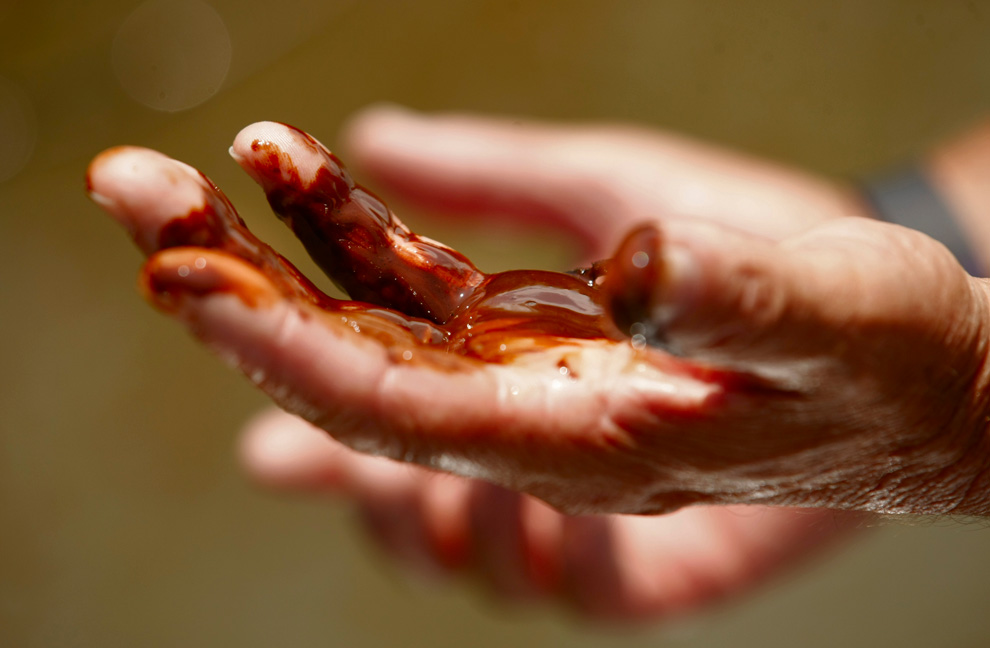
Oil continues to gush from the bottom of the Gulf of Mexico, with the U.S. Geological Survey estimating that as many as 28 million gallons of oil have been released into the Gulf, compared to 11 million gallons from the Exxon Valdez spill. BP may not be able to stop the flow until August when the drilling of a relief well is completed. Oil is already hitting the beaches and wetlands of Louisiana and is rapidly approaching Mississippi, Alabama, and the Florida Panhandle. The environmental and economic impacts of the Deepwater Horizon oil spill cannot be overstated: This may become one of the greatest ecological catastrophes in history.
Given the enormity of this environmental disaster, it is understandable that there is tremendous political and societal pressure to stop the flow and clean up the mess. However, in their rush to react to growing public pressure and do something, federal and state officials are waiving scientific review of emergency measures and embracing dubious solutions. Nowhere is this more evident than in the proposal to begin building a long sand berm to prevent oil from reaching wetlands and beaches in Louisiana. The White House has announced that this project is now moving forward, despite serious concerns among coastal scientists, including myself, that it will not be effective in keeping oil from the coast, could do more environmental harm than good, and would be extremely expensive.
Under pressure from Louisiana Gov. Bobby Jindal and other state and local officials, the U.S. Army Corps of Engineers issued an emergency permit on May 27 authorizing the state of Louisiana to construct 45 miles of artificial berm, 300 feet wide at its base and rising six feet out of the gulf, in an attempt to protect delta wetlands and barrier islands from the encroaching oil. The state had initially requested permission to build close to 128 miles of barrier, and the Corps of Engineers permit indicates the additional sections may be allowed as the permitted sections are evaluated. Jindal’s argument for building the sand berm, just off existing barrier islands, is simple: It’s better to clean oil off of man-made sand berms than in Louisiana’s wetlands, which teem with fish and wildlife.
While mitigating the environmental damage of this spill is critical, it must be done in a way that wisely utilizes the resources at hand, effectively deals with the problem (e.g., keeping oil out of wetlands), and doesn’t do more harm than good. But the emergency projects currently being proposed by various entities and permitted by the Corps of Engineers, including a plan to build a seawall in front of Dauphin Island, Alabama, have not had sufficient review and design to guarantee that any of the above goals will be met. Indeed, since the Louisiana berm will not be continuous, there is a strong likelihood that oil will flow in through the gaps, then possibly become trapped in wetlands.
In addition to its questionable prospects for success, the Louisiana berm project would be extremely expensive. The application from the state of Louisiana estimated the cost to be about $3.8 million per mile, or about $171 million for the initial 45 miles of the permitted project. In its comments on the state’s application, the U.S. Department of Interior notes that cost estimates for mobilizing sand in the area have already been produced for the planning of future barrier island restoration. Using these numbers, the Interior Department suggests the costs are likely to be closer to $500 million. Thad Allen, the U.S. Coast Guard admiral in charge of the spill cleanup, said Wednesday that BP has agreed to pay for construction of the 45-mile line of sand berms, which he estimated would cost $360 million.
A project that could cost as much as a half-billion dollars should warrant serious review. Yet it has been very difficult to find a public record or details of the proposed project design and how it was vetted. Obviously, there was never any intention to solicit public comment. This may be appropriate in an emergency, but it begs the question: Who designed the project? Have they used the best available science? And will it work as advertised?
The state of Louisiana has a wealth of fine coastal scientists who have been working on the coastal restoration of the Louisiana delta region for decades. Yet those who I have spoken with have indicated that they havenot been consulted on the project. I have yet to speak to a scientist who thinks the project will be effective. The Corps of Engineers gave agencies, such as the U.S. Environmental Protection Agency (EPA), less than a day to submit comments on the proposal after it was presented to the agencies during a teleconference on May 17. Certainly, the agencies had very little time to scientifically evaluate the potential environmental impacts of such a massive project, but in their brief submissions the agencies expressed major concerns.
The Department of Interior indicated that “we do not think the risks inherent in proceeding without more environmental study and knowledge are acceptable.”
The EPA directly questioned the proposed berm’s effectiveness, suggesting there is no evidence that the project will stop oil from entering the marshes and estuaries because it is constructed only in front of the barrier islands and will not block the inlets and deepwater passes. In addition, EPA questioned whether a project that will take at least 6 to 9 months to build would be completed in time to have any impact on the spill.
As a coastal geologist who studies coastal storm impacts, it is clear to me that this berm, located just offshore of the barrier islands, will also be extremely susceptible to erosion. Indeed, it will begin to erode immediately upon completion. Even a simple understanding of coastal processes leads one to conclude that this sandy berm could disappear within a few months. Coincidently, the U.S. government’s Climate Prediction Center released its forecast for this year’s Atlantic Basin hurricane season on the same day the berm permit was issued. Federal scientists are predicting an incredibly busy season with up to 23 named storms and 8 to 14 hurricanes. Just one of these storms tracking near the proposed berm will wipe it out. At six feet above sea level, the berm will not have the elevation or sand volume to provide significant storm protection. In fact, depending on the track of the storm, it could potentially make the storm surge higher in some areas. The berm also could prevent the flushing of some oil out of the wetlands.
In the end, we have a project that is incredibly expensive. There has been little scientific review. It is questionable if the proposed berm will prevent oil from entering the wetlands it is designed to protect. The structure will be very short-lived. And there are many potential negative impacts of this structure on the coastal environment that have not been evaluated. Coastal dredging and filling can cause significant damage to marine organisms and local ecosystems as massive amounts of sand are dug up in one location and then deposited on the sea floor in another spot. In addition, building a 45-mile sand berm could alter tidal currents and lead to the erosion of natural barrier islands that protect the Louisiana coast from hurricanes.
Yes, we need to do something, but we need a better process for deciding what that best something is. I hope I’m wrong, but I fear that this permitted berm is not a viable solution.
And the Louisiana berm is not the only example of rushed emergency permitting of a major project. With the oil steadily approaching the Alabama coastline, the Mobile, Ala. district of the Corps of Engineers released an Emergency Public Notice, also on May 27, for a permit application by BP to build a mile-and-a-half-long seawall on Dauphin Island, Alabama to block the oil from reaching the island. The goal of the project is to close off a breach in the barrier island opened by Hurricane Katrina. Now this may be a good idea, but the process gives us no insight into whether it is or isn’t. Again, agencies were given a few hours to comment. The design for the structure was presented hand-drawn on notebook paper and appears to have been pulled together by a local pile-driving company. The plans are not signed or stamped by a licensed engineer. Will it work? Who knows?
Photo Source: AP Photo; Gerald Herbert.