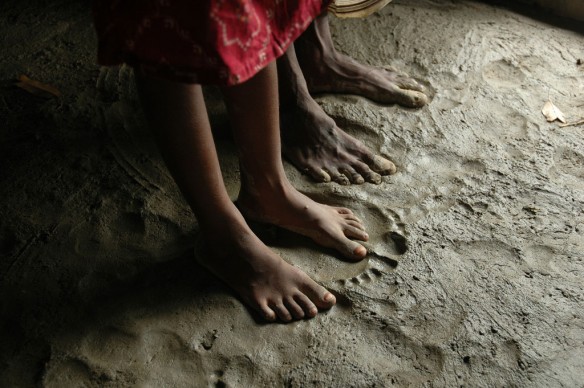
In Low-Lying Bangladesh, The Sea Takes a Human Toll

Posted In News, Sea Level Rise
Aug
27

To view this content, you must have Javascript enabled in your browser preferences. You will also need to download the latest Flash Player.


Jonathan Bjerg Møller, 2 videos: “Aila’s Victims” and “Wahidul’s Story.”

Excerpt, from Yale University, Environment 360.

Danish photographer and filmmaker Jonathan Bjerg Møller recently spent nine months in Bangladesh, chronicling the lives of people struggling to survive just a few feet above sea level.

He traveled to the South Asian nation after hearing projections from the Intergovernmental Panel on Climate Change about the millions of climate refugees that would be created this century by rising seas and more powerful storms. Møller wanted to put a human face on this issue, and decided there was no better place than Bangladesh, where 15 million of its 160 million people live less than three feet above sea level.

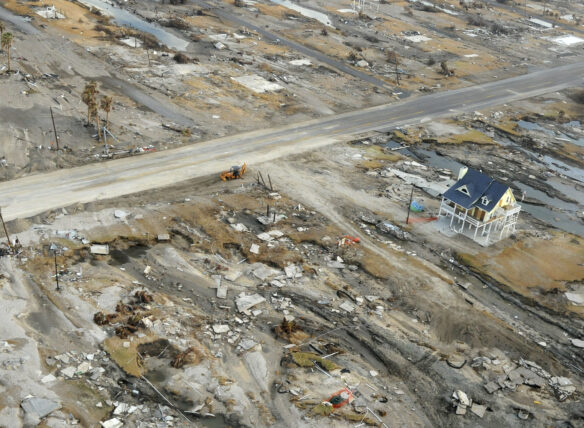
While he was in Bangladesh, Cyclone Aila struck, killing roughly 200 people and leaving thousands homeless. Møller proceeded to document the devastation from that 2009 storm, as well the impact of subsiding land and rising seas on other Bangladeshis, many of whom earn less than $1 a day. In this Yale Environment 360 report, two videos by Møller – “Aila’s Victims” and “Wahidul’s Story.”

Møller says he will leave it up to scientists to determine how much of the suffering he portrays is related to a warming climate. “I am not a scientist and I know that global warming is a contentious issue,” he says. “I wanted to focus on the people who are suffering today. The point is that these people are vulnerable today, and will become even more vulnerable in the future.”

A Bangladeshi man who is the subject of one of his videos, Wahidul, lives in the town of Kuziartek, which was once home to 40,000 people. Now, the island on which Kuziartek was located is underwater. All that is left of Kuziartek is a small embankment rising from the sea, 2 ½ miles out in the Bay of Bengal. Seven families remain there, including Wahidul’s, clinging to a disappearing strip of earth.

“But what can we do,” asks Wahidul, fearful that abandoning his village would leave him homeless in a city slum. “We have an unfortunate fate. There are many people in the world, but I doubt that anyone must suffer as much as me. People shouldn’t live where we live, but we have no choice. We have to live here.”

Original Article

Related Posts

Tags:

1 Comment to “In Low-Lying Bangladesh, The Sea Takes a Human Toll”

  • Wow..these poor people. My heart aches for them. It seems to me if they stay much longer they will all die. I would think being homeless on the streets would be better then this actually… What a very tough situation to be in! :(

Post comment

You do not have the Flash plugin installed, or your browser does not support Javascript (you should enable it, perhaps?)


Coastal Care junior
The World's Beaches
Sand Mining
One Percent