U.S. Issues New Rules on Offshore Drilling

Posted In Gulf Oil Catastrophe, News
Sep
30

Offshore Drilling Regulations

By John M. Broder, The New York Times

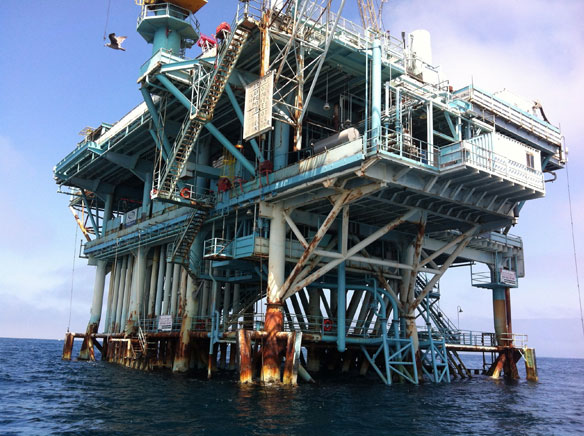
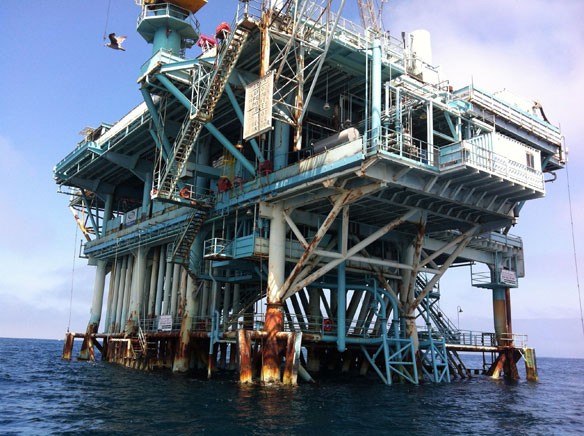
The Interior Department tightened its rules on offshore oil and gas operations today but left in place the moratorium on deepwater drilling that has left oil executives frustrated and Gulf Coast officials fuming.

The new rules, governing well casing and cementing, blowout preventers, safety certification, emergency response and worker training, provide offshore drillers with clarity on the terms under which drilling will resume when the current freeze ends.

The main conditions had already been telegraphed by the department in a safety report issued in May and in two notices to offshore operators handed down in June in response to the blowout of a BP well in the Gulf of Mexico on April 20.

Interior Secretary Ken Salazar presented the new rules in a speech Thursday morning, calling them a fundamental change that will guide all future leasing and development decisions in the gulf, the Arctic and elsewhere.

“We are raising the bar for safety, oversight and environmental protection at every stage of the drilling process,” he said in the speech, at the Woodrow Wilson International Center for Scholars here.

The rules take effect immediately under emergency rule-making powers.

In an interview, Mr. Salazar said he expected oil companies to complain, but to quickly comply.

“We’ll hear from industry that the regulations are too onerous, but the fact is, it’s a new day,” he said. “There is the pre-April 20 framework of regulation and the post-April 20 framework, and the oil and gas industry better get used to it, because that’s the way it’s going to be.”

The secretary pointedly refused to say when or under what conditions he would lift the drilling suspension, which has caused economic hardship along the Gulf Coast and political headaches for the Obama administration.

“We will lift it at our own time and when we’re ready, and not based on political pressure from anyone,” Mr. Salazar said.

The moratorium on deepwater drilling, imposed in late April, is scheduled to end on Nov. 30, but officials have signaled that it will probably be eased before then.

Senator Mary Landrieu, Democrat of Louisiana and a strong ally of the oil industry, is blocking the confirmation of Jack Lew as the new White House budget director until the moratorium is lifted or substantially eased.

Michael R. Bromwich, director of the Bureau of Ocean Energy Management, Regulation and Enforcement, the Interior Department office that now polices offshore drilling, was to deliver a report to Mr. Salazar shortly providing a blueprint for safely resuming drilling.

Mr. Salazar said he would review the report before deciding when that might happen.

On Thursday, the White House spokesman, Robert Gibbs, said the new regulations and the completion of the Bromwich report “likely” meant that the drilling pause would end before Nov. 30.

Mr. Bromwich indicated this week that even after the moratorium was lifted, it could be weeks or even months before his agency granted permits allowing the 33 idled deepwater rigs in the gulf to start up again. Permits would be issued only after companies provided new spill response plans that detailed certification of the performance of critical equipment, like blowout preventers.

Oil industry executives expressed resignation about the new rules, saying they could be met, at some cost.

Marvin E. Odum, the president of Shell Oil, said in an interview that his company had weathered the moratorium so far by renegotiating contracts on its seven idle deepwater rigs in the gulf, allowing it to keep most of its skilled workers on the payroll.

“The piece I’m more concerned about is that when the moratorium does get lifted, you won’t be able to get back to work until the permit system starts to flow again,” Mr. Odum said. “Will it be weeks, months? That’s the big question.”

Environmental advocates generally praised the new rules.

Jacqueline Savitz, a senior scientist at Oceana, a nonprofit environmental group, said that the new regulations alone would not prevent another spill.

“The BP disaster occurred because standards were not met and monitoring and inspections were too lax,” she said. “While stricter standards might help, adding them ignores the fact that there is simply no guarantee they will be followed.”

She urged Mr. Salazar to continue the freeze on deepwater drilling and extend it to shallow-water wells.

Photo Source: Marine Lawyers, Treehugger.

Original Article

Related Posts

Tags: ,

Post comment

Resources

Federal

  • Deep Water Horizon Response is the official site of the incident in conjunction with BP, DOI, NPS, USGS, CDC, USFWS, NOAA and other branches of the US government (collectively called Unified Command). Information, including the latest news, photos, area plans, and volunteer information.
  • NOAA is a government program that uses science and research to protect life, property and natural resources. This NOAA site provides maps of the spill and related statistics, including a trajectory forecast map for the oil spill.
  • The Environmental Protection Agency provides data on Air, Land, and Water pollutants including sampling maps and contaminant levels.

Louisiana

  • Volunteer Louisiana is the official site for the State of Louisiana to get involved in the spill response.
  • The Louisiana Department of Wildlife and Fisheries provides maps of closures to fishing areas in LA.
  • The Louisiana Emergency Office has made Google Earth files of the spill available to the public here http://gohsep.la.gov/oilspill.aspx and also has current information on general closures of waterways, photos, and reports.
  • The Audubon Nature Institute site provides a number for citizens to call if turtles, manatees, dolphins, or other animals are in distress
  • The Oiled Wildlife Care Network is a CA based non-profit is advising folks in the Gulf of Mexico on best practices and provide resources on how people can help.
  • The Coalition to Restore Coastal Louisiana is a non-profit organization who strive to protect and restore coastal Louisiana. Volunteers are needed for numerous actions including: monitoring, oiled wildlife recovery, boat driving, or simple monetary donations.
  • The Greater New Orleans Foundation is a philanthropic organization in Louisiana and the surrounding region that joins with other non-profit, foundations and community and government officials to address the needs of the community. The Foundation has opened the Gulf Coast Oil Spill Fund.
  • The Louisiana Bucket Brigade is an environmental health and justice organization working with communities near oil refineries and chemical plants. They aid residents in these regions to reduce pollution and protect public health. The Brigade has formed an incident map where you can report observed signs of oil.

Alabama

  • The Alabama Coastal Foundation is an education based organization whose mission is to project the quality of Alabama’s coastal resources. They are currently training volunteers to help directly with the spill response.
  • The site by the Alabama Governor’s Office of Faith-Based and Community Initiatives gives basic phone numbers.
  • The Mobile Bay National Estuary Program is an organization funded by the EPA fighting the environmental challenged facing Mobile Bay. This site gives e-mail addresses and phone numbers to help and provides basic information.
  • The Mobile Bay Keeper is a group of citizens who are interested in preserving the Mobile Bay watershed as well as protecting the health of the individuals and environment in the Bay. Check out the latest information about the spill and learn how to become a member and donate to the cause.

Mississippi

Florida

  • The Florida Department of Environmental Protection is the lead agency in FL and this website provides the most thorough information in the state.
  • Volunteer Florida, the website of the Governor’s Commission on Volunteerism and Community Service and the State Emergency Response Team, lists volunteer opportunities by county.
  • The Escambia County site provides summary points of actions taken by BP and FL with a focus on the County.
  • The Pinellas County site is a concise list of related local websites and numbers for information.
  • The Gulf County site has current news on the spill as it relates to the county
  • Volunteer directly with the largest wild bird hospital in the United States, the Suncoast Seabird Sanctuary.

Organizations and other networks

  • American Birding Association
  • Audubon is a global leader in protecting birds and other wildlife and their habitats. They are partnering with other organizations.
  • The Sierra Club is a grassroots environmental organization that works to protect communities, wild places, and the planet. Updates on the oil spill, as well as volunteer and donation information.
  • The Nature Conservancy is a conservation organization with a mission to preserve and protect ecologically significant lands and waters for nature and people. Learn more about the oil spill and how to help out at http://www.nature.org/wherewework/northamerica/states/alabama/features/oilspill.html and check out their blog.
  • Sea Grant is nationwide network (administered through NOAA) of 32 university-based programs that work with coastal communities on environmental stewardship and the responsible use of our coasts. The Gulf of Mexico Sea Grant Programs provides resources to educators with research that may be impacted by the spill.
  • The National Wildlife Federation is America’s largest conservation organization whose mission is to protect and restore wildlife habitat, confront global warming and connect with nature. Get the latest information on the oil spill crisis and how to help.
  • The mission of Tri-State Bird Rescue and Research is to provide rehabilitation of injured, orphaned, and oiled native wild birds to return to their natural environment. Donate to their research.
  • Green Peace is an international organization that strives to save the planet from environmental threats such as global warming, destruction of forests and deterioration of the oceans. Follow their blog and learn how to take action.
  • Global Green USA is an international environmental non-profit organization with an office in New Orleans that strives to fight global climate change, eliminate weapons of mass destruction and create clean, safe drinking water for all. Follow their blog and get involved.
  • Matter of Trust is a non-profit organization focused on materializing sustainable systems by mimicking Mother Nature as well as concentrating on manmade surplus, natural surplus and eco-educational programs. Learn very simple ways to help the oil spill crisis.
  • The official Facebook page of Unified Command.
  • BP Gulf of Mexico response.