Oyster bed restoration among first since oil spill

Posted In Gulf Oil Catastrophe, News
Jan
24


Volunteers help lay bags of oysters shells

By Brian Skoloff, Associated Press

Volunteers from across the country are rebuilding oyster reefs along the Gulf of Mexico’s delicate shoreline, hoping to revive oyster beds under assault for decades from overharvesting, coastal development, pollution, and most recently the BP oil spill.

The waters harbor much of the world’s last remaining productive natural oyster beds, but BP PLC’s oil well blowout dumped millions of gallons of crude into the Gulf and dealt yet another blow to the once bountiful habitat.

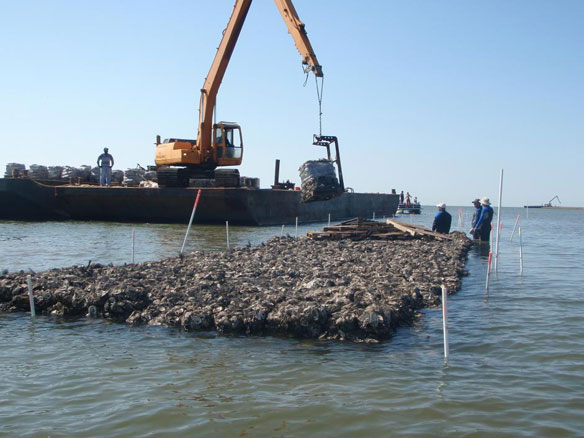
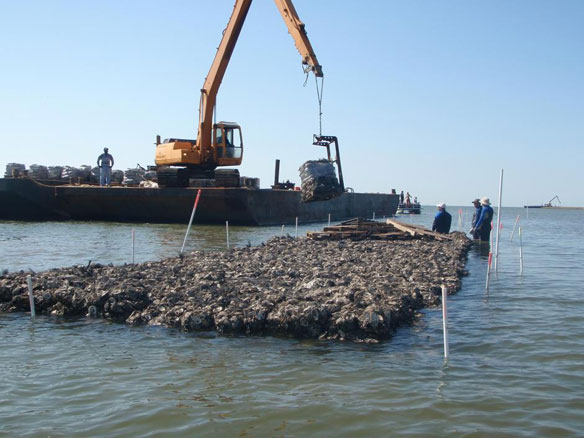
This weekend, volunteers descended on Mobile Bay with 23,000 bags of oyster shells aimed at eventually creating 100 miles of new oyster reefs near the shoreline. The goal is to help replenish oyster reefs that promote new growth, help protect delicate salt marshes and sea grasses, and act like coral in the tropics to provide habitat for numerous marine species.

It’s one of the first coastal restoration projects since the oil spill sent thick crude washing into estuaries and onto beaches.

Biologist Rob Brumbaugh of The Nature Conservancy, which helped organize the event, said studies show that the world has already lost 85 percent of its natural oyster reefs, but the Gulf of Mexico remains a bright spot, even after the oil spill.

“Certainly the oil spill was a wake-up call and a serious impact that we have to recover from, but frankly, there’s been 100 years or more of oyster reefs and salt marsh and sea grass loss,” he said. “That’s the larger thing that we’re trying to recover from and set a new course.”

About 350 volunteers came to lay 10-pound bags of oyster shells in a neat line several feet high on mud flats about 150 feet offshore to create new reefs across Mobile Bay. The U.S. Fish and Wildlife Service contributed about $70,000 to the project, which was approved before the oil spill but was delayed until the waters were relatively clear of crude. Funding also came from the National Oceanic and Atmospheric Administration and donations. The total cost is expected to be about $100 million, and it likely will take up to five years to complete if funding continues.

Brumbaugh said the oysters also help keep waterways clean. Each oyster can filter up to 50 gallons of water a day.

“If you remove all these oysters from the estuaries, you’ve essentially unplugged the aquarium. It’s like turning off your pool filter and expecting it to stay in good shape,” he said.

Chesapeake Bay oysters also have been devastated and are at only about 1 percent or 2 percent of their historic highs, hit by years of disease, pollution and overharvesting.

Oysters along the entire Gulf Coast were hit hard in the spill’s aftermath, prompting closures and delays of harvesting seasons that are part of the region’s economic lifeblood.

Louisiana saw scores of oyster die-offs from the summer of oil, in part because officials flooded some areas with fresh water to try to keep crude out of sensitive bays and estuaries. That upset the balance of fresh and salt water, killing oysters. In Mississippi, oyster mortality rates were so high after the spill, the state did not allow a dredging season for the first time in more than 20 years.

It instead opted for a limited tonging season, a much more laborious process of culling oysters from the sea floor by hand using a rake. State officials have said it’s unclear if the oyster deaths were directly caused by the oil or a combination of factors, including unusually warm summer waters.

As much as 65 percent of the nation’s oysters come from the Gulf.

“It’s just time we start doing something more to reverse the problem,” said Dan Everson of the U.S. Fish and Wildlife Service, who helped with the Mobile oyster reef restoration project this weekend.

A U.S. presidential panel created to investigate the oil spill recently recommended that 80 percent of fines and penalties eventually levied against responsible parties, a number that will likely be in the billions of dollars, be dedicated to Gulf Coast restoration.

Casi Callaway, executive director of the environmental group Mobile Baykeeper, said the spill’s aftermath could have a bright spot: More money dedicated to wetlands projects and other efforts.

“The oil disaster was big, the biggest environmental disaster in our country,” Callaway said. “But what we have with these ideas is an opportunity to create some of the biggest environmental restoration projects in our country.”

Original Article

Related Posts

Tags:

Post comment

Resources

Federal

  • Deep Water Horizon Response is the official site of the incident in conjunction with BP, DOI, NPS, USGS, CDC, USFWS, NOAA and other branches of the US government (collectively called Unified Command). Information, including the latest news, photos, area plans, and volunteer information.
  • NOAA is a government program that uses science and research to protect life, property and natural resources. This NOAA site provides maps of the spill and related statistics, including a trajectory forecast map for the oil spill.
  • The Environmental Protection Agency provides data on Air, Land, and Water pollutants including sampling maps and contaminant levels.

Louisiana

  • Volunteer Louisiana is the official site for the State of Louisiana to get involved in the spill response.
  • The Louisiana Department of Wildlife and Fisheries provides maps of closures to fishing areas in LA.
  • The Louisiana Emergency Office has made Google Earth files of the spill available to the public here http://gohsep.la.gov/oilspill.aspx and also has current information on general closures of waterways, photos, and reports.
  • The Audubon Nature Institute site provides a number for citizens to call if turtles, manatees, dolphins, or other animals are in distress
  • The Oiled Wildlife Care Network is a CA based non-profit is advising folks in the Gulf of Mexico on best practices and provide resources on how people can help.
  • The Coalition to Restore Coastal Louisiana is a non-profit organization who strive to protect and restore coastal Louisiana. Volunteers are needed for numerous actions including: monitoring, oiled wildlife recovery, boat driving, or simple monetary donations.
  • The Greater New Orleans Foundation is a philanthropic organization in Louisiana and the surrounding region that joins with other non-profit, foundations and community and government officials to address the needs of the community. The Foundation has opened the Gulf Coast Oil Spill Fund.
  • The Louisiana Bucket Brigade is an environmental health and justice organization working with communities near oil refineries and chemical plants. They aid residents in these regions to reduce pollution and protect public health. The Brigade has formed an incident map where you can report observed signs of oil.

Alabama

  • The Alabama Coastal Foundation is an education based organization whose mission is to project the quality of Alabama’s coastal resources. They are currently training volunteers to help directly with the spill response.
  • The site by the Alabama Governor’s Office of Faith-Based and Community Initiatives gives basic phone numbers.
  • The Mobile Bay National Estuary Program is an organization funded by the EPA fighting the environmental challenged facing Mobile Bay. This site gives e-mail addresses and phone numbers to help and provides basic information.
  • The Mobile Bay Keeper is a group of citizens who are interested in preserving the Mobile Bay watershed as well as protecting the health of the individuals and environment in the Bay. Check out the latest information about the spill and learn how to become a member and donate to the cause.

Mississippi

Florida

  • The Florida Department of Environmental Protection is the lead agency in FL and this website provides the most thorough information in the state.
  • Volunteer Florida, the website of the Governor’s Commission on Volunteerism and Community Service and the State Emergency Response Team, lists volunteer opportunities by county.
  • The Escambia County site provides summary points of actions taken by BP and FL with a focus on the County.
  • The Pinellas County site is a concise list of related local websites and numbers for information.
  • The Gulf County site has current news on the spill as it relates to the county
  • Volunteer directly with the largest wild bird hospital in the United States, the Suncoast Seabird Sanctuary.

Organizations and other networks

  • American Birding Association
  • Audubon is a global leader in protecting birds and other wildlife and their habitats. They are partnering with other organizations.
  • The Sierra Club is a grassroots environmental organization that works to protect communities, wild places, and the planet. Updates on the oil spill, as well as volunteer and donation information.
  • The Nature Conservancy is a conservation organization with a mission to preserve and protect ecologically significant lands and waters for nature and people. Learn more about the oil spill and how to help out at http://www.nature.org/wherewework/northamerica/states/alabama/features/oilspill.html and check out their blog.
  • Sea Grant is nationwide network (administered through NOAA) of 32 university-based programs that work with coastal communities on environmental stewardship and the responsible use of our coasts. The Gulf of Mexico Sea Grant Programs provides resources to educators with research that may be impacted by the spill.
  • The National Wildlife Federation is America’s largest conservation organization whose mission is to protect and restore wildlife habitat, confront global warming and connect with nature. Get the latest information on the oil spill crisis and how to help.
  • The mission of Tri-State Bird Rescue and Research is to provide rehabilitation of injured, orphaned, and oiled native wild birds to return to their natural environment. Donate to their research.
  • Green Peace is an international organization that strives to save the planet from environmental threats such as global warming, destruction of forests and deterioration of the oceans. Follow their blog and learn how to take action.
  • Global Green USA is an international environmental non-profit organization with an office in New Orleans that strives to fight global climate change, eliminate weapons of mass destruction and create clean, safe drinking water for all. Follow their blog and get involved.
  • Matter of Trust is a non-profit organization focused on materializing sustainable systems by mimicking Mother Nature as well as concentrating on manmade surplus, natural surplus and eco-educational programs. Learn very simple ways to help the oil spill crisis.
  • The official Facebook page of Unified Command.
  • BP Gulf of Mexico response.