Plutonium found in soil at Japan nuclear plant

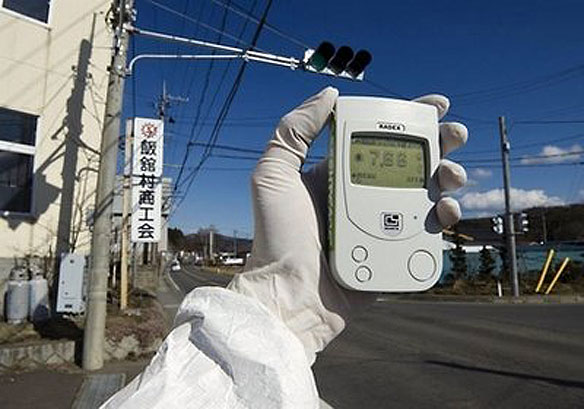
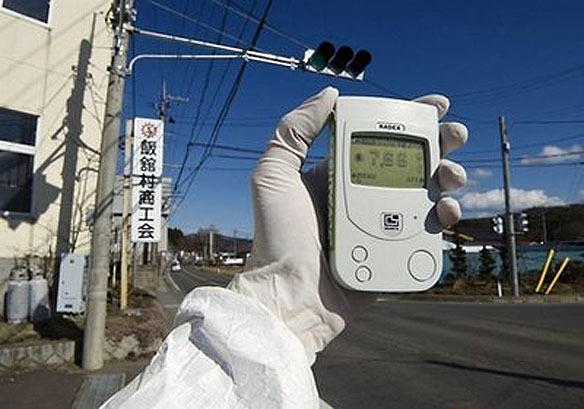
A Greenpeace photo shows a member of the environmental group holding a Geiger counter displaying radiation … Photo source: AFP/GREENPEACE
By the NIKKEI
Plutonium was detected Monday in soil at five places at he Fukushima Dai-ichi tsunami-stricken nuclear plant in Japan, but the levels are, allegedly, not believed to pose a threat to human health.
Low levels of plutonium have been detected at the stricken Fukushima Daiichi nuclear power plant, Japan chief government spokesman Yukio Edano said Tuesday, adding further complications to plant recovery efforts after the discovery of highly toxic water outside one of the plants the day before.
Edano said at a morning press conference that of five soil samples taken, two had been found to contain low levels of plutonium, but said the levels do not pose an immediate risk. The Japan Nuclear and Industrial Safety Agency later said that the detected plutonium was not a harmful amount for on-site workers.
The plutonium discovery, along with the finding of dangerously radioactive water, offered the strongest signs yet that one or more of the plant’s reactor cores may have partially melted.
The new reports “back up the view that there was a partial melting of the fuel rods,” Edano said.
While highly toxic levels of radioactivity have already been found in water at the plant, the composition of radioactive materials in the water is considered less of a threat to the general public than plutonium. According the U.S. Environmental Protection Agency, external exposure to plutonium poses a very small health risk, but internal exposure to plutonium is an “extremely serious health hazard” that can expose organs and tissues to radiation, and increase the risk of cancer.
At the same time, plant operator Tokyo Electric Power Co. (9501) is battling to remove the highly contaminated water, which has collected in the basements of the three reactors at the plant. These rooms hold the pumps that provide the essential cooling systems for the reactors that have yet to be restored to functionality.
At Reactor No. 2, which is thought to be in the most dangerous condition, the water escaping contains extremely high levels of radiation at 1,000 millisieverts per hour, an amount that is four times the maximum annual exposure level for an emergency worker.
Radioactive water has also almost completely filled trenches around the plant that hold various pipes and could begin to spill into the ocean 55 meters away if measures are not taken. Like its basement, the No. 2 unit’s trench is filled with highly radioactive water.
Nuclear safety agency spokesman Hidehiko Nishiyama said Tuesday that draining of the basement at the No. 1 unit was underway but that work for Nos. 2 and 3 had to wait until storage space for the radioactive water could be found. They hoped to begin emptying the unit’s condenser tank of water there to make space for the water from the basements.
Edano said the amount of water being injected into the unit was being reduced to help lower the strain on the reactor’s systems and therefore limit the leakage. He said that this has caused an increase in the reactor temperature, however, and that cooling of the nuclear fuel needed to take precedence over the problems posed by the leaking water.
The leakage has also raised concerns that there could be damage to either the pressure vessel or the containment vessel, although safety officials have said this is not likely given the data.
The trench resembles a utility tunnel in urban areas. In the trench, a pipe is laid to carry sea water into the nuclear complex. It is meant to remain dry, but it was submerged when a magnitude-9.0 earthquake unleashed a massive tsunami on March 11.
The Nuclear Safety Commission, a nuclear experts panel set up by the government, on Monday issued a statement that leakage of radioactive water into the soil or the sea is the biggest concern.