Some Lessons Learned from the Two Worst Oils Spills in U.S. History ?

Posted In Gulf Oil Catastrophe, News
Aug
19

gulf-oil-spill-noaa
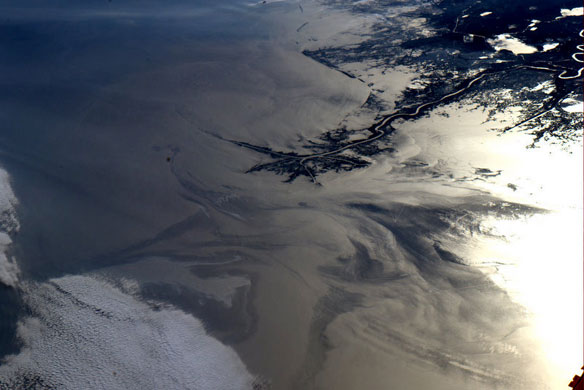
Gulf oil spill. Photo source: NOAA

Excerpts; from Lawrence Berkeley National Laboratory

One year after the notorious BP Deepwater Horizon oil spill in the Gulf of Mexico and two decades after the Exxon Valdez spill in Prince William Sound off the coast of Alaska one scientific lesson is clear, microbes matter! Despite vast differences in the impacted marine ecosystems and the circumstances of these two worst oil spills in U.S. history, oil-degrading microorganisms played a significant role in reducing the overall environmental impact of both spills…
However, “It is too soon to tell what the impact of the BP Deepwater Horizon oil spill will be on the delicate marsh environments and beach communities in Louisiana, Mississippi, Alabama, and Florida,” Terry Hazen a microbial ecologist who leads the Ecology Department and Center for Environmental Biotechnology at Berkeley Lab’s Earth Sciences Division, says.

“Many further studies will be needed to answer this question, but we can say that when oil is highly dispersed in the water column and where microbial populations are well adapted to hydrocarbon exposure, such as in Gulf of Mexico waters, biodegradation of oil proceeds very rapidly.”…

Read Full Article

oil-depth-exxon-valdez
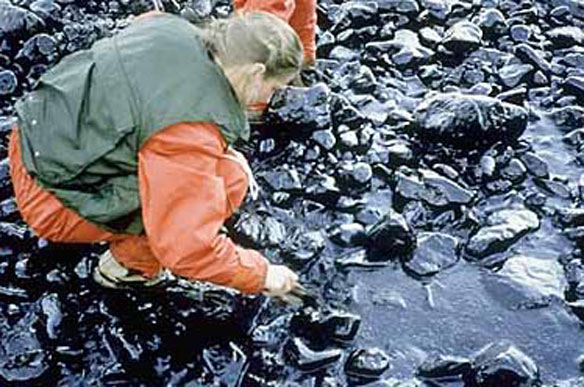
Exxon Valdez Oil spill. In many locations in Prince William Sound, the action of tides and currents distributed oil throughout the entire intertidal zone. In Northwest Bay on Knight Island, tides have deposited oil on this rocky beach face up to the top of the intertidal zone. During the initial response to the spill, NOAA scientists surveyed oiled beaches, such as this one, to assess the depth of oil penetration. Caption and photo source: NOAA
oil-pollution-sediment
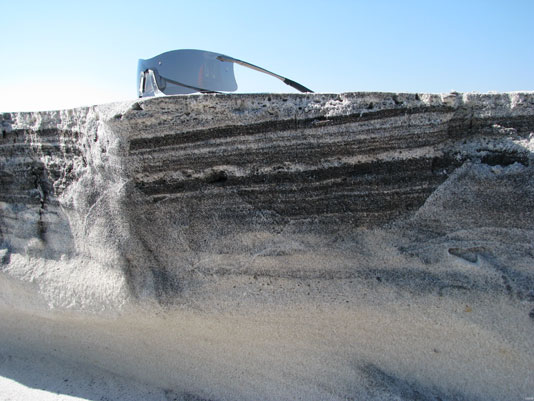
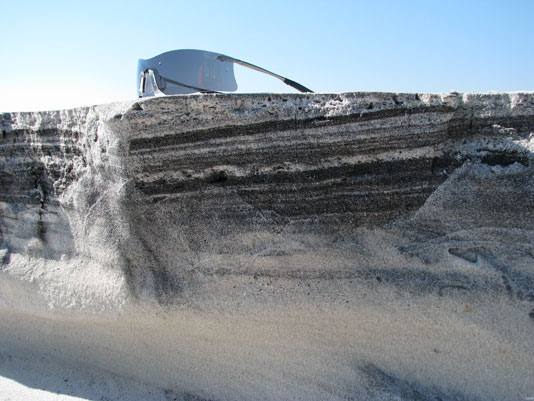
The amount of oil visible on the surface of a beach doesn’t necessarily indicate the amount of oil on that beach, since oil can penetrate into beach sediments. Scientists collected samples of water and sediments for analysis of inorganic and organic constituents, benthic invertebrates, and oil and microorganism fingerprints before and after petroleum-associated product arrived on shore. Caption and photo source: USGS

A Photos Gallery: Exxon Valdez 20 Years Later, Oil Remains, The National Geographic

Exxon Valdez Anniversary: 20 Years Later, Oil Remains, The National Geographic
Two decades after the worst oil spill in U.S. history, huge quantities of oil from the tanker Exxon Valdez still coat Alaska’s shores with a toxic glaze, experts said in March 2009. Oil is tucked into isolated coves and underneath the sand. Prince William Sound is what ecologists call a closed system—it’s not exposed to big, pounding waves, so the oil has time to seep into the sand, according to Margaret Williams, who oversees conservation in the Bering Sea for the nonprofit World Wildlife Fund (WWF). “The damage that [the spill] created is something beyond anyone’s imagination…”
Related Posts

Tags: ,

Post comment

Resources

Federal

  • Deep Water Horizon Response is the official site of the incident in conjunction with BP, DOI, NPS, USGS, CDC, USFWS, NOAA and other branches of the US government (collectively called Unified Command). Information, including the latest news, photos, area plans, and volunteer information.
  • NOAA is a government program that uses science and research to protect life, property and natural resources. This NOAA site provides maps of the spill and related statistics, including a trajectory forecast map for the oil spill.
  • The Environmental Protection Agency provides data on Air, Land, and Water pollutants including sampling maps and contaminant levels.

Louisiana

  • Volunteer Louisiana is the official site for the State of Louisiana to get involved in the spill response.
  • The Louisiana Department of Wildlife and Fisheries provides maps of closures to fishing areas in LA.
  • The Louisiana Emergency Office has made Google Earth files of the spill available to the public here http://gohsep.la.gov/oilspill.aspx and also has current information on general closures of waterways, photos, and reports.
  • The Audubon Nature Institute site provides a number for citizens to call if turtles, manatees, dolphins, or other animals are in distress
  • The Oiled Wildlife Care Network is a CA based non-profit is advising folks in the Gulf of Mexico on best practices and provide resources on how people can help.
  • The Coalition to Restore Coastal Louisiana is a non-profit organization who strive to protect and restore coastal Louisiana. Volunteers are needed for numerous actions including: monitoring, oiled wildlife recovery, boat driving, or simple monetary donations.
  • The Greater New Orleans Foundation is a philanthropic organization in Louisiana and the surrounding region that joins with other non-profit, foundations and community and government officials to address the needs of the community. The Foundation has opened the Gulf Coast Oil Spill Fund.
  • The Louisiana Bucket Brigade is an environmental health and justice organization working with communities near oil refineries and chemical plants. They aid residents in these regions to reduce pollution and protect public health. The Brigade has formed an incident map where you can report observed signs of oil.

Alabama

  • The Alabama Coastal Foundation is an education based organization whose mission is to project the quality of Alabama’s coastal resources. They are currently training volunteers to help directly with the spill response.
  • The site by the Alabama Governor’s Office of Faith-Based and Community Initiatives gives basic phone numbers.
  • The Mobile Bay National Estuary Program is an organization funded by the EPA fighting the environmental challenged facing Mobile Bay. This site gives e-mail addresses and phone numbers to help and provides basic information.
  • The Mobile Bay Keeper is a group of citizens who are interested in preserving the Mobile Bay watershed as well as protecting the health of the individuals and environment in the Bay. Check out the latest information about the spill and learn how to become a member and donate to the cause.

Mississippi

Florida

  • The Florida Department of Environmental Protection is the lead agency in FL and this website provides the most thorough information in the state.
  • Volunteer Florida, the website of the Governor’s Commission on Volunteerism and Community Service and the State Emergency Response Team, lists volunteer opportunities by county.
  • The Escambia County site provides summary points of actions taken by BP and FL with a focus on the County.
  • The Pinellas County site is a concise list of related local websites and numbers for information.
  • The Gulf County site has current news on the spill as it relates to the county
  • Volunteer directly with the largest wild bird hospital in the United States, the Suncoast Seabird Sanctuary.

Organizations and other networks

  • American Birding Association
  • Audubon is a global leader in protecting birds and other wildlife and their habitats. They are partnering with other organizations.
  • The Sierra Club is a grassroots environmental organization that works to protect communities, wild places, and the planet. Updates on the oil spill, as well as volunteer and donation information.
  • The Nature Conservancy is a conservation organization with a mission to preserve and protect ecologically significant lands and waters for nature and people. Learn more about the oil spill and how to help out at http://www.nature.org/wherewework/northamerica/states/alabama/features/oilspill.html and check out their blog.
  • Sea Grant is nationwide network (administered through NOAA) of 32 university-based programs that work with coastal communities on environmental stewardship and the responsible use of our coasts. The Gulf of Mexico Sea Grant Programs provides resources to educators with research that may be impacted by the spill.
  • The National Wildlife Federation is America’s largest conservation organization whose mission is to protect and restore wildlife habitat, confront global warming and connect with nature. Get the latest information on the oil spill crisis and how to help.
  • The mission of Tri-State Bird Rescue and Research is to provide rehabilitation of injured, orphaned, and oiled native wild birds to return to their natural environment. Donate to their research.
  • Green Peace is an international organization that strives to save the planet from environmental threats such as global warming, destruction of forests and deterioration of the oceans. Follow their blog and learn how to take action.
  • Global Green USA is an international environmental non-profit organization with an office in New Orleans that strives to fight global climate change, eliminate weapons of mass destruction and create clean, safe drinking water for all. Follow their blog and get involved.
  • Matter of Trust is a non-profit organization focused on materializing sustainable systems by mimicking Mother Nature as well as concentrating on manmade surplus, natural surplus and eco-educational programs. Learn very simple ways to help the oil spill crisis.
  • The official Facebook page of Unified Command.
  • BP Gulf of Mexico response.