The Health, Beauty and Ecosystem of Our Beaches is Under Threat.
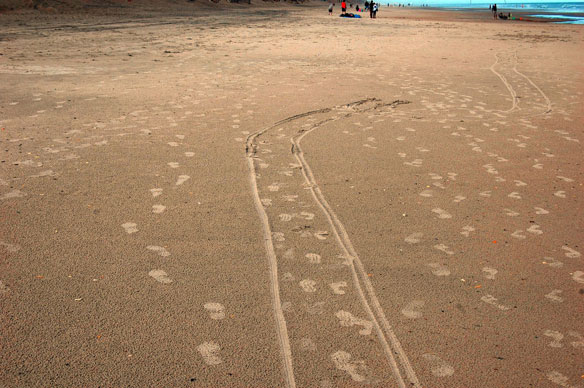
Driving on the beach
The driving cause for most of these problems is overdevelopment and poor coastal management. If no buildings crowded the shoreline, there would be no shoreline armoring, beach nourishment, threats to the beach fauna and flora or shoreline erosion problems.
The work of the Santa Aguila Charitable Trust will emphasize the impacts of sand mining and shoreline armoring: the first because the effects of sand mining have been largely ignored on a global scale and the latter due to its overwhelming negative impacts on the world’s beaches.
- Coastal Care Introduction: The world’s beaches are in dire need of attention.
- Sea Level Rise: There is no debate: sea level rise is happening right now and threatens all of our beaches.
- Poor Coastal Development: Even a single building negatively impacts a beach, so it is hard to imagine what hundreds of them might do.
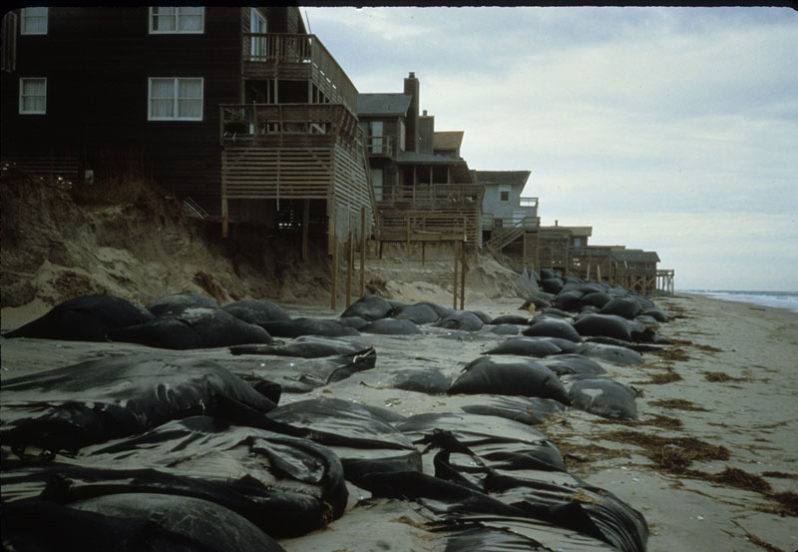
- Shoreline Armoring: Sea walls and constructed rock shorelines are not beautiful vacation destinations and can eventually destroy the natural beach.
- Sand Mining: Right now, sand is being taken off beaches all over the world destroying beach habitat, accelerating erosion, and reducing protection from storms.
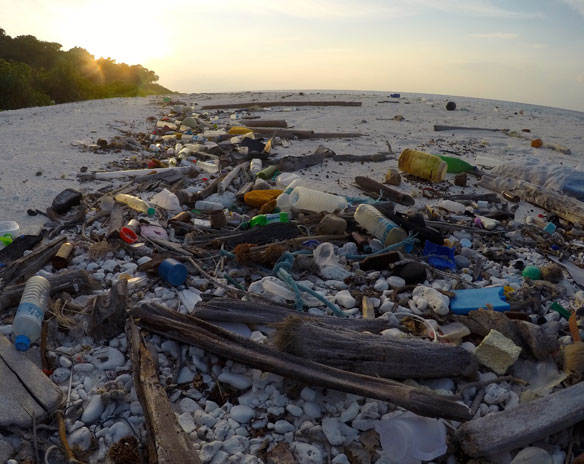
- Pollution: Pollution is hazardous to animals and plants, takes many forms, and is an increasing global problem.
- Mangrove & Coral Destruction: Development and beach construction projects destroy critical habitat for beach plants and animals everyday.
The Beach Ecosystem is Made Up of Living and Non-Living Parts.
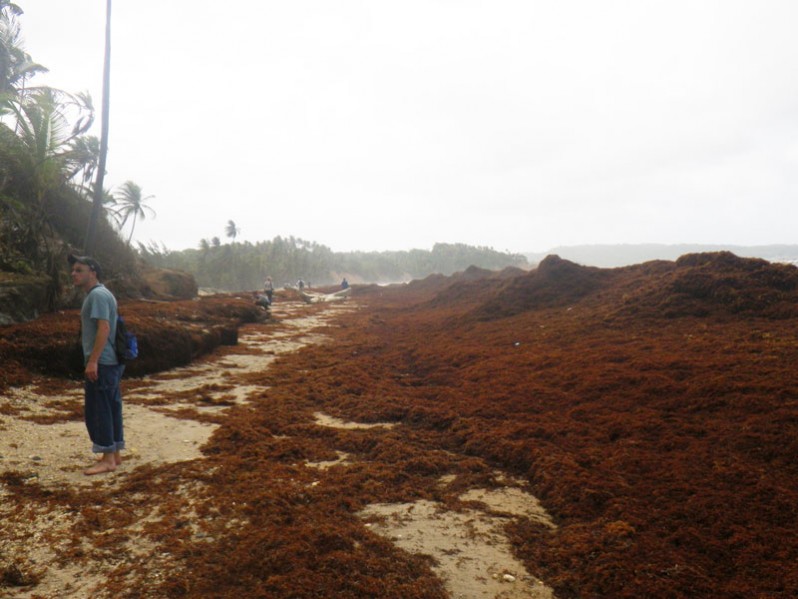
Heavy mineral accumulations
Plants and animals and sand and water influence each other, often amidst breathtaking scenery. Greater than the sum of its parts, beaches sustain major portions of global biodiversity. With over half the world’s population living within 50 km of the coast, human influence on that biodiversity is inevitable, making the study of beaches even more important.
- Beach Basics: Learn how a beach is defined, why beaches are different colors, and the parts of a beach.
- Exploring the Sand: Sand is a major part of most beaches. Learn some details about sand that you might not know.
- Waves: What causes waves to break, different types of waves, and rogue waves.
- Tides: Learn about tides, storm surges, and sea level rise.
- Sand Dunes: Sand dune formation, types of dunes, and where they exist.
- Flora and Fauna: The beach is home to scores of amazing plants and animals. Learn just a few of these and make your next visit to the beach a treat.
- Seashells: Seashells are an important part of biological and geological beach processes as well as an important part of human culture.
- Safety: Follow these safety tips to reduce risk of danger at the beach.
You Can Make a Difference and Help Save Our Beaches
Low tide seawall marsh, Pivers Island
Learn simple things that you can do to help protect beaches starting with simply educating others about the beach thereby helping us celbrate the beauty of the world’s beaches.
- Advocacy: Learn what the experts are saying on major beach issues. Follow these simple tips to make sure your impact is reduced and others can enjoy the beach too.
- Petition on Sand Mining: Sign our petition to end global beach sand mining.
- Petition on Hardened Beach Structures: Sign our petition supporting the ban on hardened beach structures in North Carolina.
- Donate: Support our mission.
How do you celebrate the beach? Let us know!
Celebrating the beach is key! Compete in our drawing contest, write a poem, share a photograph, tell a story or play a game. The beach holds something for everyone!
- Art Contest: Send us your art and it may end up on this site.
- Games: Mazes, puzzles, crosswords, coloring activities, and more.
- Resources: Our growing list of all things coastal.
- Beach Poetry: Drawing the line in the sand.
Surfing in / Features
E.P.A : It Was Wise to Use Oil Dispersant
While many scientists expressed grave concerns about the unprecedented aerial spraying of chemical dispersants in the Gulf of Mexico region.
Fishermen wrinkle their noses at smell tests
Smell tests on dozens of specimens from the area revealed barely traceable amounts of toxins, the FDA said. The tests were done not by chemical analysis, but by scientists trained to detect the smell of oil and dispersant.
Erosion doubles along Alaska’s Arctic coast
Around the world, as many as 150 million people may become “climate refugees” because of global warming, according to an Environmental Justice Foundation report, which attributes some of the moves to rising sea levels.
New Questions Arise On Dispersant Use In Oil Spill
The Coast Guard routinely approved BP requests to use thousands of gallons of chemicals per day to break up the oil, despite a federal directive to use the dispersant rarely.
Pondicherry-Tamil Nadu, South India
The erosion of Pondicherry beaches is not an isolated case along the Indian coastline; it is estimated that the coastline has already lost about 25% (1,500 km) of its beaches due to anthropogenic factors.
Jamaica’s Beaches in peril
Several beaches on the western end of Jamaica could be totally wiped out in the next 5 to 10 years if local authorities and residents do not act now.
BP Oil spill waste management in question
More than 35,000 tons of solid waste have been hauled from beaches and the ocean to regional landfills.
China alleges: ocean cleared of oil 10 days after spill
But beaches along Dalian’s long shoreline remain closed indefinitely, with oil covering rocks and pebbles on the sand.
On the Surface, Gulf Oil Spill Is Vanishing Fast; Concerns Stay
Understanding the effects of the spill on the shorelines that were hit, including coastal marshes, is expected to occupy scientists for years.