
Traditional protection proves more successful for clams in American Samoa – Mongabay
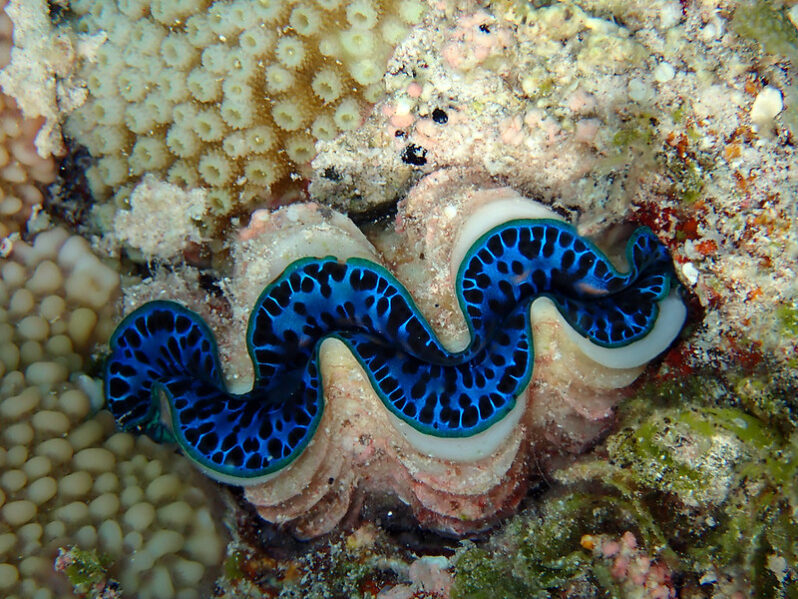
For coastal Indigenous communities in American Samoa, giant clams are deeply rooted in fa‘a Sāmoa (the Samoan way of life) and local food systems…According to the findings of a study published in PeerJ, it is village-based protections like fa‘asao (fishery closures) that have helped conserve giant clams lying in the islands’ shallow water coral reefs. The authors found that the highest clam densities and species are located in remote sites and areas under traditional village enforcement, outperforming federally designated no-take zones on the most populated island….
Bleaching, It’s Not Just for Corals – Hakai Magazine
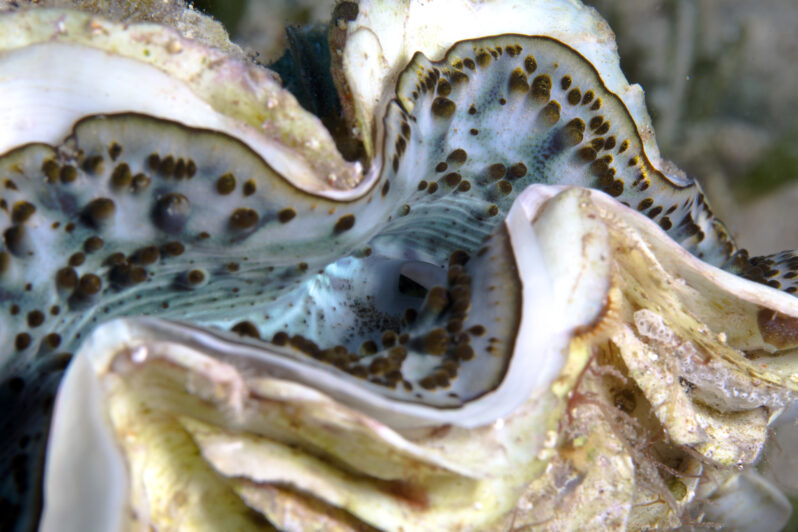
Giant clams suffer similar struggles with warming water, though the consequences don’t seem quite as dire.
Bleaching occurs when a stressed marine creature, most commonly a coral, expels its symbiotic algae and turns a ghostly white, often in response to a warming sea. But bleaching affects more than just corals. Giant clams—massive mollusks that can grow more than 1.2 meters in diameter and weigh as much as 225 kilograms—can bleach, too. And in recent research, scientists have learned more about how bleaching disrupts these sessile giants, affecting everything from their nutrition to their reproduction…