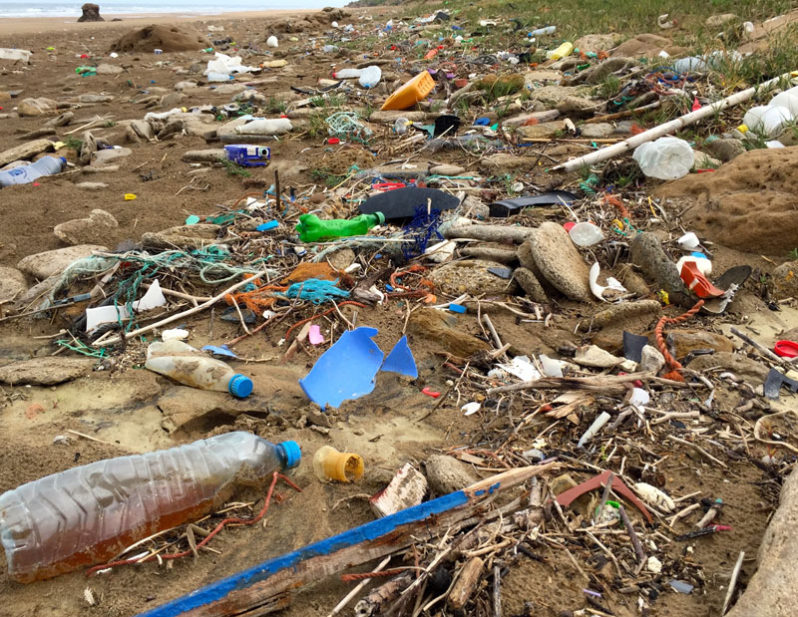
Plastic Pollution
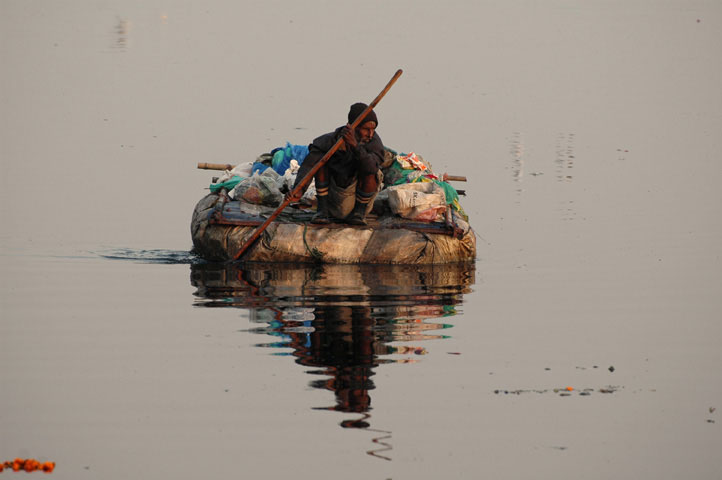
Photo: Manan Vastsyayana
Unprecedented Plastic Pollution
When The Mermaids Cry: The Great Plastic Tide
By Claire Le Guern Lytle
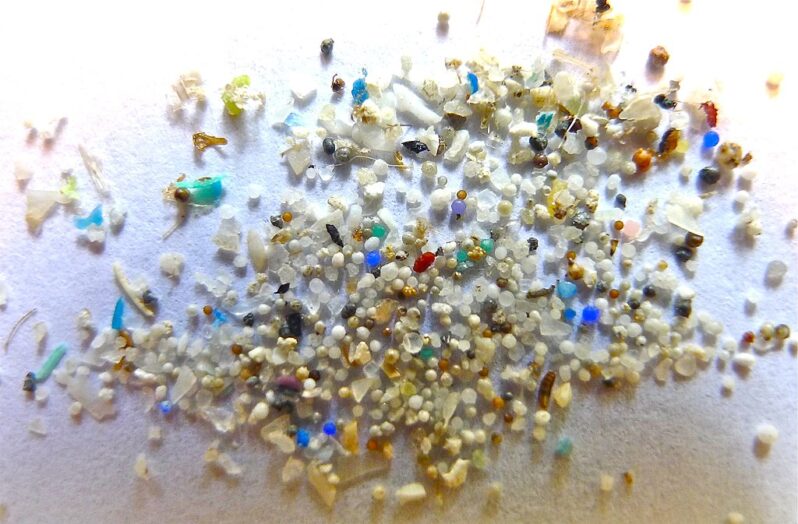
The world population is living, working, vacationing, increasingly conglomerating along the coasts, and standing on the front row of the greatest, most unprecedented, plastic waste tide ever faced.
Washed out on our coasts in obvious and clearly visible form, the plastic debris spectacle blatantly unveiling on our beaches is only the prelude of the greater story that unfolded further away in the the world's oceans, yet mostly originating from where we stand: the land.
In 2008, our global plastic consumption worldwide has been estimated at 260 million tons. Plastic is versatile, lightweight, flexible, moisture resistant, strong, and relatively inexpensive. Those are the attractive qualities that lead us, around the world, to such a voracious appetite and over-consumption of plastic goods. However, durable and very slow to degrade, plastic materials that are used in the production of so many products all, ultimately, become waste with staying power. Our tremendous attraction to plastic, coupled with an undeniable behavioral propensity of increasingly over-consuming, discarding, littering and thus polluting, has become a combination of lethal nature. Read More
Oil Pollution
Exxon Valdez oil spill in 1989
Boy walks on beach in Cochin, southwest India.
Oil spills on the worlds beaches and in the worlds oceans
By Linda Pilkey-Jarvis
Beaches and river shorelines all over the world are at risk from oil spills. Spills are most likely to occur while oil is transported or transferred between oil tankers, barges, pipelines, refineries, and distribution or storage facilities. Spills may also occur during natural disasters (such as hurricanes), or through deliberate acts by countries at war, sunken ships, vandals, or illegal dumpers. Read More
Trash Pollution
Ocean Pollution... and Ocean Polluters
By Bekah Barlow
Did you know that it's legal to dump trash in the ocean? Yes, there are limitations for what you can and cannot dump. But it is perfectly acceptable to dump your raw sewage, paper, rags, glass, metal, bottles, or similar refuse, as long as you are at least 12 miles away from the nearest shoreline. It is not permissible to dump plastics anywhere. Read More
Surfing in / Pollution
Cannes: Underneath the Surface
As the 65th Cannes Film Festival is unfolding, a european environmental organization, Expedition med, released a series of videos depicting the grave marine pollution affecting the Mediterraneean sea, plastic and marine debris covering the seafloor… this, just a few feet away from the glitter and glamour of the Marches du Festival…
Sustainable Earth: Oceans
Scientists ask Rio+20 leaders to protect the bounty of the Seven Seas for future generations.
Brazil’s Jubarte Field Oil Spill Under Navy Investigation
An oil spill was discovered off Brazil’s coast near the country’s Espirito Santo state, Brazil’s Navy said on Thursday, the latest in a series of spills that have raised questions about the safety of a massive expansion of the country’s oil production capacity.
Number of English Beaches Gaining Blue Flag Awards Rises
The number of England’s beaches gaining Blue Flag awards for cleanliness has increased in 2012. But about 30% of the beaches might not reach tougher water quality standards being introduced next year.
Living Planet Report 2012: Looks At Ecological State Of The Earth
Twenty years on from the Rio Earth summit, the environment of the planet is getting worse not better, according to a report from WWF. Humans are currently using the equivalent of one and a half Earths to support our activities. This and other startling findings were revealed tuesday with the release of World Wildlife Fund’s 2012 Living Planet Report.
Comments Off
Plastic Trash Altering Ocean Habitats
Sharp increase of small plastic debris in the ‘Garbage Patch’ could have ecosystem-wide consequences.
Chittagong Beach Ship Breaking Yards, Bangladesh
Stretched along 12 miles of what just a decade ago was a pristine sandy beach, ore carriers, container ships, gas tankers, cruise liners and cargo ships of every size and description are being dismantled by hand in 140 similar yards, at Chittagong beach Ship Breaking Yard, Bangladesh, the world’s second largest ship breaking area. Every year more than 250 redundant ships, many from Britain and Europe, come here to be broken up.
Pollution for the Sake of Economic Growth
Rapid economic growth will continue to be energy-intensive and highly polluting for the foreseeable future, adding to environmental harm on a global scale and having a tremendous impact on ecological systems, according to a study that looked at a decade’s worth of data from 30 Chinese provinces to build a comprehensive model of pollution.
Wind Pushes Plastics Deeper Into Oceans, Driving Trash Estimates Up
After taking samples of water at a depth of 16 feet (5 meters), a researcher at the University of Washington, discovered that wind was pushing plastic particles below the surface. That meant that decades of research into how much plastic litters the ocean, conducted by skimming only the surface, may vastly underestimate the true amount of plastic debris in the oceans.