Sea Level Rise
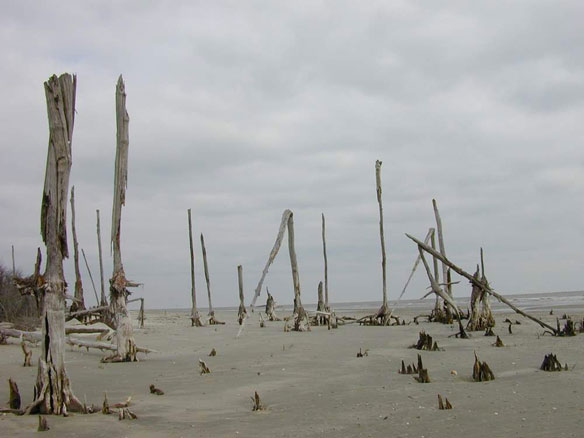
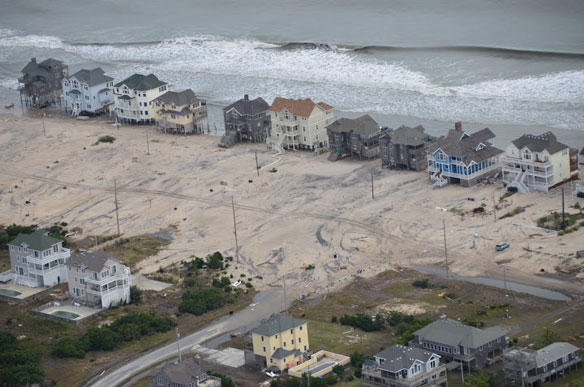
There will always be beaches, but sea level rise will ensure that they will not be in the same place in the future. The beaches will still exist throughout this change, but many of the buildings may not. Efforts to save development, however do threaten beaches, such as shoreline armoring structures.
Although relative amounts of rise may seem very small, only a few millimeters per year, the cumulative effect of these small rises each year over a long period of time (100+ years) causes major problems. Accelerated rates of erosion are attributed to sea level rise and erosion causes large economic losses around the world each year due to the close proximity of buildings and critical infrastructure. This includes transportation systems, gas and oil lines as well as electricity lines and power plants.
Most developed coasts and beaches have buildings very close to the ocean leaving little room for the ever-expanding ocean. The future effects of sea level rise on coastal civilization over the entire world are of great concern. Over half of the world’s population lives within 100 km of the coast. Over the next 50 years, damage due to coastal development will be devastating, but if the rate of sea level rise increases, the results could be catastrophic. This issue threatens areas from New York City in the United States to the Pearl River Delta in China to the Maldives.
The world map below allows you to see elevations of coastal areas. Areas in red are the lowest in elevation and are most prone to flooding. Check out Manhattan in New York City. If you think the situation there looks dire, be sure to check out the effects of a 2 m rise in sea level on Pearl River Delta in China, home to more than 40 million people. Map courtesy of globalwarmingart.com
Surfing in / Sea Level Rise
Floating Cities: Strategies of Adaptation And Long-Lasting Anticipation ?
Climate change is redefining the rules by which we live and at a pace we never expected. Because of rising sea level, several areas of the globe are in danger of vanishing from the map, disappearing under water. Society must adapt and maybe, one day, live in floating houses. Emerging designs and technologies promote the concept of living with natural flooding instead of resisting it …
NASA Satellites Detect Pothole on Road to Higher Seas
Like mercury in a thermometer, ocean waters expand as they warm which contributes to drive sea levels higher over the long term. For the past 18 years, the U.S./French Jason-1, Jason-2 and Topex/Poseidon spacecraft have been monitoring the gradual rise of the world’s ocean in response to global warming.This year, continents got extra dose of rain, so much so that global sea levels actually fell over most of the last year.
Pacific Walruses Studied as Sea Ice Melts
The extent of sea ice has been less in recent summers, and large herds of walruses have been hauling out on beaches in Alaska and Russia in the past few years, forsaking sea ice for sand in what has become a symbol of climate warming. Studies show that In 2010, walruses came ashore in late August, and this year, the sea ice disappeared from the shelf earlier, and walruses have already begun to come ashore.
Ice-shelf collapse from subsurface warming as a trigger for Heinrich events.
An analysis of prehistoric “Heinrich events”creating mass discharges of icebergs into the North Atlantic Ocean, make it clear that very small amounts of subsurface warming of water can trigger a rapid collapse of ice shelves, scientists say.
Ancient Tides Quite Different From Today
Geological forces that act over hundreds to millions of years, such as plate tectonics, ice ages, land uplift, erosion and sedimentation, have caused the tides, generally thought to be one of the most predictable forces on Earth, to vary wildly throughout history, according to a new study.
Unexpected Source of Sea Level Rise Found
Surprising patterns of melting during the last interglacial period suggest that Greenland’s ice may be more stable, and Antarctica’s less stable, than many thought, a new study shows.
UN climate change conference and the world security
The UN Security Council expressed concern that the possible adverse effects of climate change could aggravate certain existing threats to international peace and security and that the loss of territory in some States due to sea-level rise, particularly in small low-lying island States, could have possible security implications.
The Rising Sea
On Shishmaref Island in Alaska, homes are being washed into the sea. In the South Pacific, small island nations face annihilation by encroaching waters. In coastal Louisiana, an area the size of a football field disappears every day. For these communities, sea level rise isn’t a distant, abstract fear: it’s happening now and it’s threatening their way of life… A book by Orrin H. Pilkey and Rob Young, published by Island Press.
Rising Oceans: Too Late to Turn the Tide?
Unless we dramatically curb global warming, we are in for centuries of sea level rise at a rate of up to three feet per century. Much of the world’s population lives relatively close to sea level, thus this is going to have huge impacts, especially on poor countries.