
How Will Creatures That Can Barely Move Handle Climate Change? – Hakai Magazine
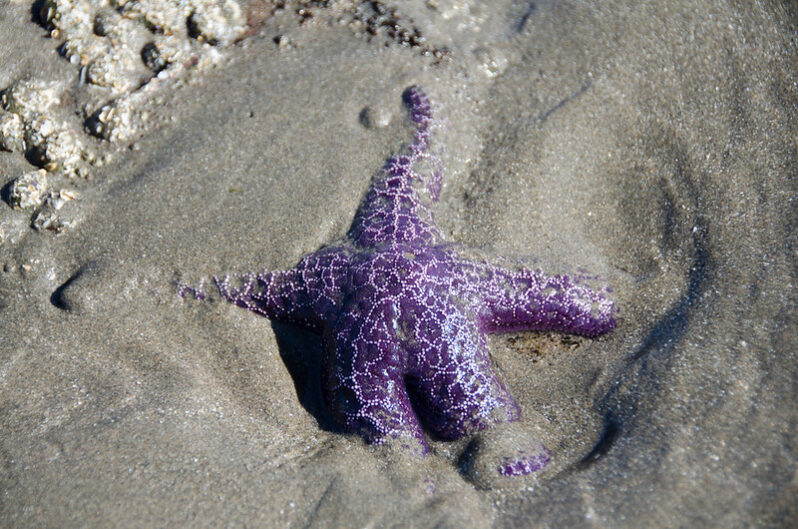
As the world warms, animals living near the coast are being battered by stronger storms, rising seas, and extreme temperatures. While fish, birds, and other species might be able to escape—often toward the poles—many marine creatures can barely move, let alone speed out of the way.
Scientists have long known that on hot days more mobile shoreline creatures like crabs take steps to control their body temperature by scuttling into cool crevices…
Why are Tunisia’s beaches disappearing and what does it mean for the country? – Reuters
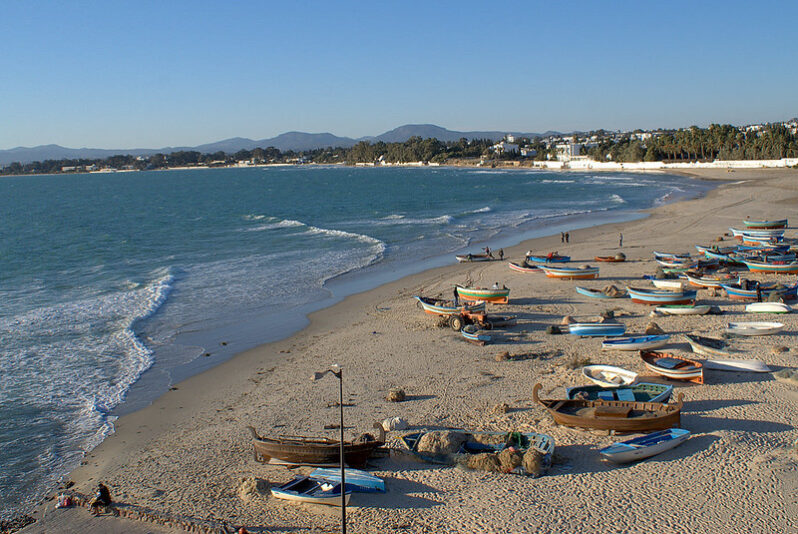
Rising sea levels are causing Tunisia’s beaches to gradually disappear. This is making life hard for the country’s tourism and fishing industries.
The Maghreb – made up of Morocco, Tunisia, Algeria and Libya – is more affected by coastal erosion than any region outside South Asia, the World Bank found in a 2021 study. Among these countries, Tunisia has had the highest erosion rates in the last three decades, averaging almost 70cm a year, it found…
Beach erosion: Satellites reveal how climate cycles impact coastlines – UNSW Sydney
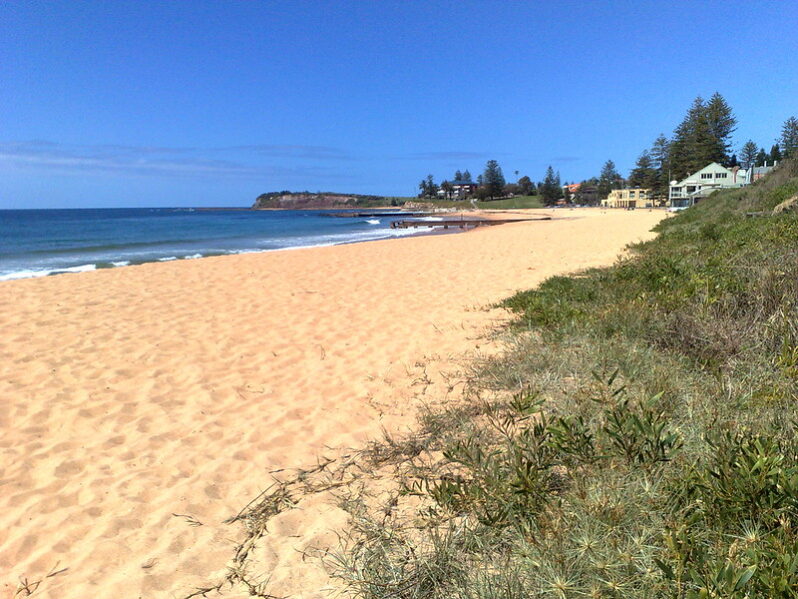
New research shows coastlines across the Pacific Ocean may respond differently to El Niño and La Niña cycles.
Researchers from UNSW Sydney have analyzed millions of satellite photos to observe changes in beaches across the Pacific Ocean. The findings, published in Nature Geoscience today (Feb. 10), reveal for the first time how coastlines respond to different phases of the El-Niño-Southern Oscillation (ENSO) cycle…
Bio-Based Plastics Aim to Capture Carbon. But at What Cost? – Wired Magazine
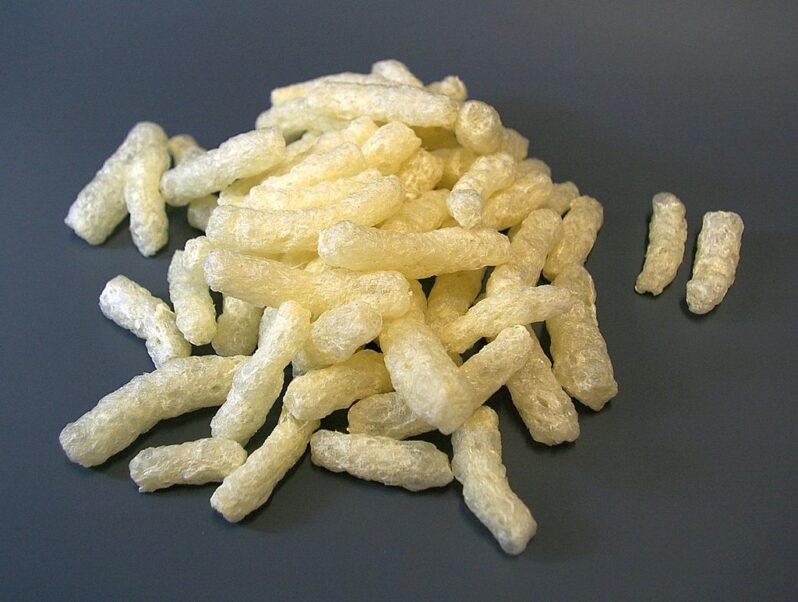
Growing crops to make plastic may theoretically reduce reliance on fossil fuels, but at an enormous environmental cost…bio-based plastics are problematic for a variety of reasons. It would take an astounding amount of land and water to grow enough plants to replace traditional plastics — plus energy is needed to produce and ship it all…But let’s say there was a large-scale shift to bioplastics — what would that mean for future emissions? That’s what a new paper in the journal Nature set out to estimate…
Beaches on Scotland’s ‘Hawaii of the North’ at risk after sand stolen – The Telegraph
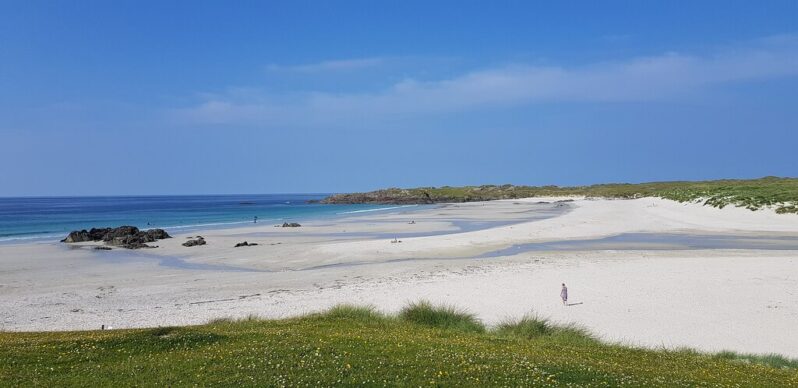
With its stunning white crystal sands, it is known as “Hawaii of the North”. But beachcombers are said to be removing the famous sands of Tiree in the Hebrides on an industrial scale. Landowner Argyll Estates suspects sand is being “stolen” by “greedy” islanders under cover of darkness. Reports also suggest that it is “the more affluent residents” who are involved “so the reasons for this may not always be hardship but perhaps greed…”
Opinion: Through an Artist’s Eye, Scientific Tools Help Tell Vital Stories – Undark Magazine
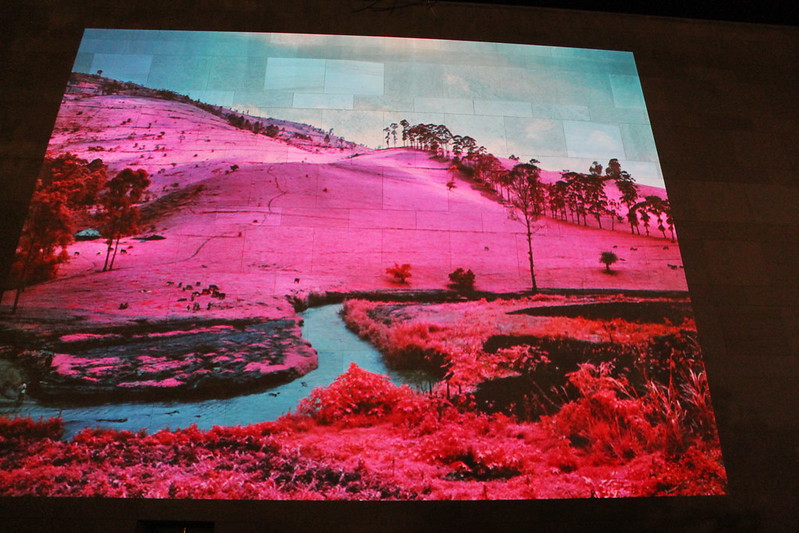
Perhaps one of the most salient marks of human ingenuity is our ability to peer into places our eyes were never designed to see. We can now glimpse the birth of distant galaxies with the Webb telescope, or spot structures hidden deep inside the human cell through electron cryomicroscopy…But through an artist’s eye, such technological tools can transcend their scientific purpose to deliver insights about our fast-warming planet that are more likely to resonate with the public…
Inside plans for Copenhagen’s divisive artificial storm-absorbing peninsula – CNN
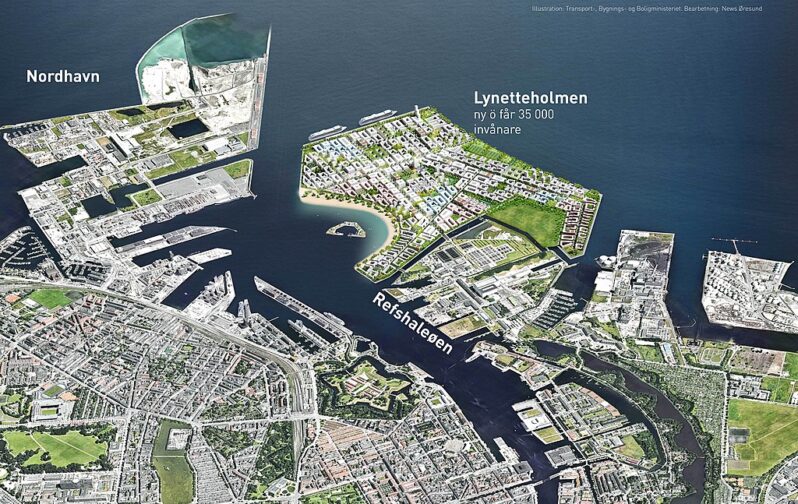
In January 2022, a team of developers, architects and environmental consultants began work on a 50-year project that — if completed — will become one of Denmark’s most ambitious and controversial infrastructure schemes to date: A 271-acre man-made peninsula devised to shield its capital, Copenhagen, from rising sea levels…
Stop ‘wishcycling’ and get wise: how to recycle (almost) everything – the Guardian
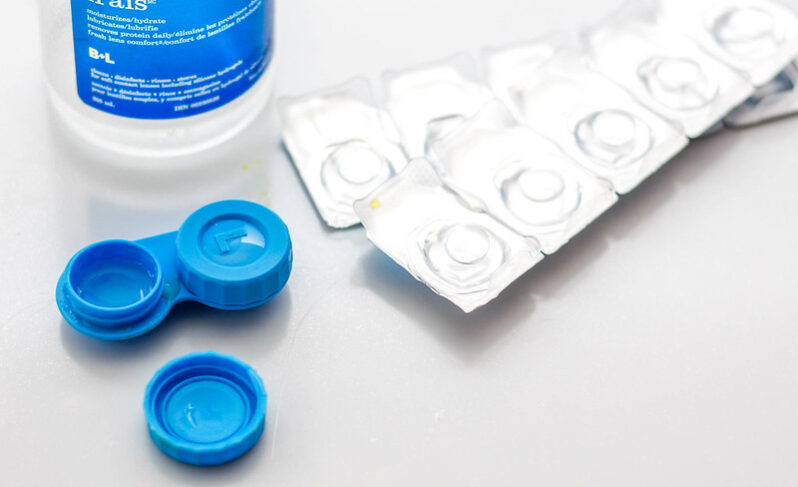
From contact lenses to blister packs and used dental floss, there are items that perplex even the most dedicated recycler…Labelling often requires a doctorate in semiotics to decode, kerbside collections are a postcode lottery and council recycling centres are often difficult to access without a car. At home, packaging piles up…All of it amounts to us collectively wondering whether recycling is ultimately pointless because it’s all going to end up in landfill in the developing world…
Opinion: Facts Haven’t Spurred Us to Climate Action. Can Fiction? – Undark Magazine

SCIENTISTS MUST BE wondering what it will take to scare us straight. Watching flood waters submerge 80 percent of New Orleans during Hurricane Katrina didn’t do it. Nor did videos shot by Australians in 2019 as they fled walls of flame, a hellish orange haze in all directions. Will the deaths of more than 6 million people in the Covid-19 pandemic …jolt the world into action? I wouldn’t count on it.