
More than 80% of world’s coral reefs hit by worst bleaching event in history – the Independent

‘We’re looking at something that’s completely changing the face of our planet,’ scientists warn…
15 years after the BP oil spill disaster, how is the Gulf of Mexico faring? – Mongabay

The Deepwater Horizon disaster on April 20, 2010, was the largest offshore oil spill in U.S. history, releasing an estimated 4.9 million barrels of oil into the Gulf of Mexico…Fifteen years later, the gulf ecosystem shows a complicated picture of both resilience and lingering damage, with some species, like brown pelicans, recovering, while others, like humans, dolphins and deep-sea corals, continue to struggle with long-term health impacts.
Shocking state of Britain’s waters revealed . . . potentially deadly bacteria double – the Independent

Surge in coastlines, rivers and lakes with unsafe levels of E coli and intestinal enterococci due to sewage spills…
Where does hurricane waste go? We tracked it with Air Tags to find out – the Washington Post

The small 1.54-square-mile Treasure Island would produce over 128,000 cubic yards of debris after the storms — roughly 2 million standard kitchen trash bags worth of waste…
The Destruction of the National Oceanic and Atmospheric Administration – Gary Griggs | Op-Ed

“Move fast and break things” is a catchphrase popularized by Mark Zuckerberg, suggesting that rapid innovation and progress are achieved by embracing experimentation and accepting that mistakes and failures are inevitable…While this approach may have benefits in the tech world, it is no way to run a nation, yet, sadly, this is what we are now experiencing in Washington, D.C., with the administration’s plans underway now to essentially destroy the National Oceanic and Atmospheric Administration.
DOGE and Trump quash a Klamath River basin comeback – the Los Angeles Times

The Trump administration ruined what should have been a good spring in the Klamath River basin…
Caspian Sea’s rapid decline threatens endangered seals, coastal communities and industry, study warns – Physics.org

Water levels in the Caspian Sea—the world’s largest landlocked water body—are getting lower, as hotter temperatures cause more water to evaporate than is flowing in. Even if global warming is limited to below 2°C, it is likely that the level of the Caspian Sea will decline by 5 to 10 m, but if temperatures rise further, water levels could drop by as much as 21 m by 2100..
Salmon return to the Klamath’s Oregon waters, but the river’s headwaters are still blocked – Jefferson Public Radio
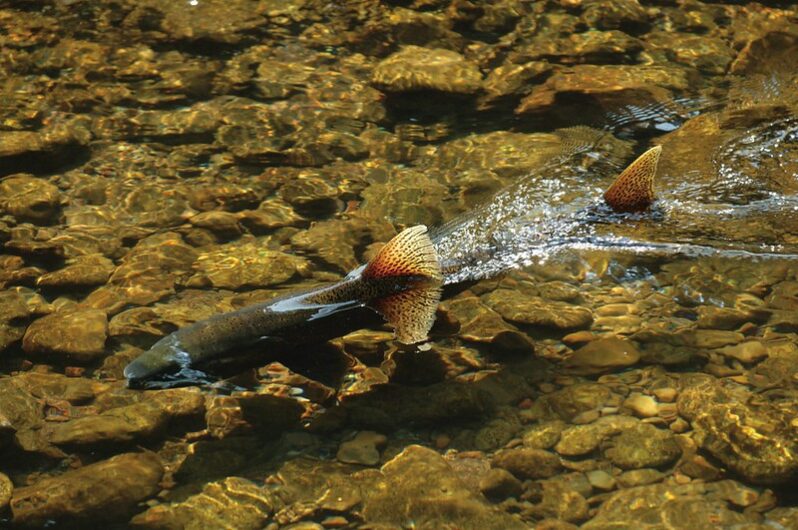
After decades of conflict, farmers and tribes say they’re working in concert to restore salmon habitat in the Klamath Basin. But two dams remain…
‘Underwater avalanches’ are creating ocean microplastics hotspots – Oceanographic
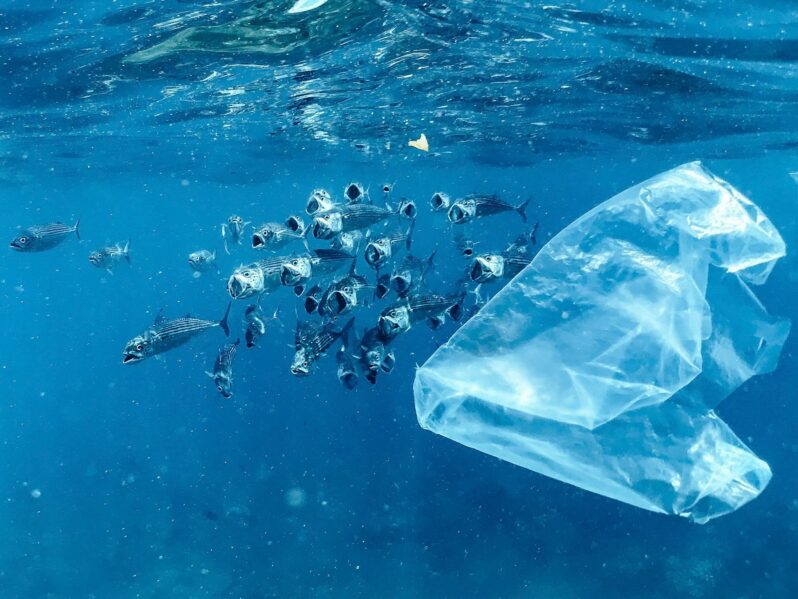
Scientists from The University of Manchester and the National Oceanography Centre have found that fast-moving ‘underwater avalanches’ known as turbidity currents are moving vast quantities of microplastics pollution to areas of high biodiversity…