Oil spill off Mumbai coast: tangible damage to mangroves

Mumbai Oil Spill

Scientists begin 2-year survey of damage caused to coast

By Snehal Rebello, Hindustantimes

To assess the damage caused by the oil spill across Mumbai coast, two teams of scientists from the Bombay Natural History Society (BNHS) will start a two-year long systematic scientific assessment on August 17th. “We will be looking at how both the mangrove and faunal community structures have been damaged and at what pace the oil is going into the ecosystem,” said Deepak Apte, marine biologist and assistant director, BNHS. “We will see how long it takes for species to recolonise.”

Ten scientists will carry out field surveys in Uran and Raigad. Sample collection will be repeated once in 15 days for rapid assessment for the next three months because it will help in identifying a trend.

Following the August 7th spill, oil was found accumulating in mangroves at Navi Mumbai, Uran and Alibaug. Tar balls were also found on-shore in Sasvane, Kihim, Revas and Mandava along the Raigad coastline, Uran, Vashi and in pockets of Colaba.

The first assessment of the Bombay Natural History Society (BNHS), after studying the impact of the spill, showed that more than 300 hectares of verdant mangrove across a 100km stretch of coastline had been completely destroyed. “It will take at least one year to two years for them to regenerate and we will have to wait for the next seeding season to see whether the mudflats still have the oil slick,” BNHS marine scientist Deepak Apte said. He said it was best to leave the mangroves alone with minimum human intervention.

“Measures like bio-remediation (artificial injection of bacteria for accelerating growth) will not succeed here,” Apte said.

Mangrove Elephanta

A 15-member team from the National Environmental Engineering Research Institute (NEERI) has also started collecting water and sediment samples from “new in-between areas” such as Thane creek and Vashi; apart from those reported such as Sassoon Dock, Sewri, Colaba and Alibaug.

“We have started analysing the samples collected during the spill. Collection of samples will continue because we could get surprises or may also need to redo the process in some areas,” said Rakesh Kumar, director, NEERI, Mumbai.

elephanta-mangrove
Elephanta Beach and Mangrove.

BNHS team will study certain groups of mangroves and animals such as telescopic shells and fiddler crabs over two years based on five parameters.

“The next two weeks will be crucial because we will be able to see the mortality of various species. After 15 days, there are chances that the oil may get flushed out slightly,” said Apte.

Original Article


Oil spill off Mumbai coast as two cargo ships collide: India

By Manasi Kakatkar-Kulkarni.

An oil spill off the coast of India, was caused when two Panamanian flagged cargo ships – MSC Chitra and MV Khalijia-111 – collided off the Mumbai coast on August 7th. MSC Chitra was carrying 1219 containers with over 2662 tons of fuel, 283 tons of diesel and 88040 tons of lubricant oil which is now pouring into the Arabian Sea. The ship has spilled 500 tons of fuel and lubricants, with some 300 oil containers having rolled into the sea. There were no casualties due to the collision.

The containers had fallen off the MSC Chitra, which ran aground and has been listing heavily following the collision.
Built in 1980, MSC Chitra with a tonnage of 33,113 tonnes has about 1,200 tonnes of fuel oil in the ruptured tanks on the port side and the remaining in her starboard side which is out of the water.

Of the total 1,219 containers it was carrying at the time of the accident, 512 were loaded on the deck, including the ones containing hazardous material, and the remaining 707 were below the deck.

The government statement said analysis of water samples so far showed no contamination from hazardous chemicals like sodium hydroxide or pesticides. However, oil has been sighted ashore in Mumbai, affecting mangroves in some areas.

Nearly 1,100 pounds (500 kilograms) of fish samples in the area were contaminated with oil. Authorities have stepped up sample testing the quality of the fish catch, the statement said.

The state authorities have banned fishing in the area until Aug. 15.

The spill is causing serious environmental and economic concerns for Mumbai.The spill has now reached the Alibag and Uran areas, with potential risk to the mangrove belt in the region, as also the ancient Elephanta Caves. The island caves are a world heritage site with exquisite sculptures and architecture dating back to 6-7 centuries AD. Almost all coastal districts of Maharashtra have been put on high alert following the spill. Ships have also been asked to keep clear of the area until directed otherwise.

Elephanta Caves
Elephanta Caves.

The fishing community in Maharashtra has been forced to stop work for three days translating into millions of Rupees in losses. The worst hit however, are the marginal fishermen who depend upon their daily catch along the coastline for survival. The 800,000 strong fishing community in Maharashtra is now looking for compensation from the government for the losses incurred.

The Indian Coast Guard and the Mumbai Port Trust have been trying to salvage the situation with the help of anti-pollution dispersal spray systems. SMIT Salvage, a Netherland based emergency response and environmental care services industry has been recruited by the Mumbai Port Trust to control the oil spill. The treacherous tidal conditions in the region are also making disaster management difficult.

India, particularly the Arabian Sea is not new to oil spills what with a number of oil refineries along the coasts of Maharashtra and Gujarat. However, there have been few major spills in the region. The National Oil Spill Disaster Contingency Plan adopted in 1996 provides the framework for handling such situations. The recent oil spill incident can be said to be a Tier 1 incident (spills up to 700 tons) for which individual ports and oil handling facilities are required to be prepared.

The Mumbai spill could tell how well India is really prepared.

Mangroves Mumbai


Mumbai Spill Hits More than Mangroves: A different Perspective

By Eric Bellman, The Wall Street Journal

mumbai-waste-beach-pollution
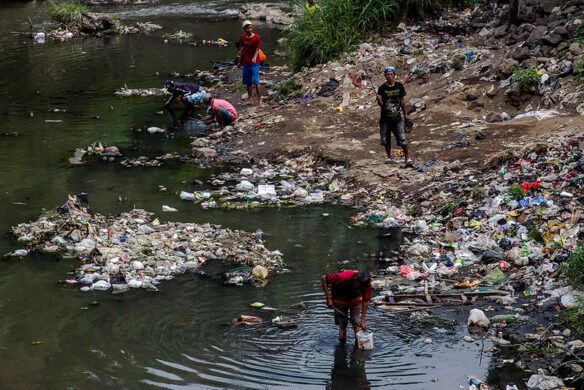
Disposal of waste in a country where municipal waste management systems are already weak will become a problem of severe proportions. Photo Source: Reuters

For any Mumbaikar who has spent time near the Arabian Sea, the sudden competitive frenzy of worry about the city’s sea, oil spill and mangrove is surprising.

The city has close to 20 million inhabitants by some estimates, and it dumps tons of waste and dirty water into the Arabian Sea every day.

The pollution comes from the overflow from the city’s streets and sewers as well as from the common practice of just tossing garbage into the water. While not all of this waste is toxic, you would imagine that most things that could be hurt by a two-day oil slick would already be dead.

Original Article

Related Posts

Tags: ,

Post comment

You do not have the Flash plugin installed, or your browser does not support Javascript (you should enable it, perhaps?)


Coastal Care junior
The World's Beaches
Sand Mining
One Percent
Leave only footprints