Excerpt:
The powerful storm caught many people off guard as it drove through six states. As devastating as it was, did Helene truly change anything?
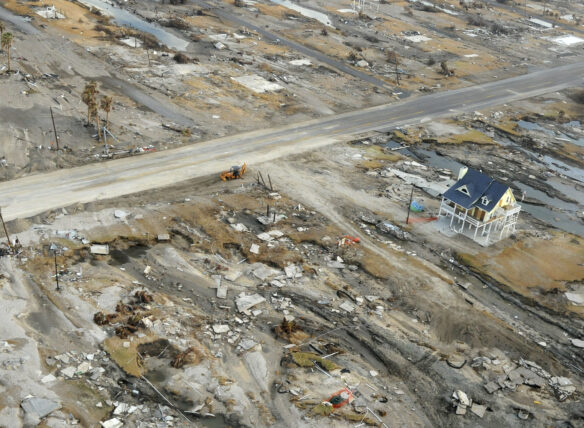
A year ago, Hurricane Helene drove its way up from the Gulf of Mexico through Florida, Georgia, the Carolinas, Tennessee, and Virginia, devastating areas that have rarely — if ever — endured so powerful a hurricane. Many communities are still rebuilding as they wait to see what another hurricane season will bring.
We asked Helene survivors in some of the hardest-hit areas one simple question: Did the storm change how you prepare for a disaster? Some are rethinking their own lives and choices, and some are even rethinking their futures — whether they should move away, beef up their own emergency preparedness, dig in and get to know their neighbors, or some combination of the three. Because ready or not, the next one could be on its way. Here’s what residents and community leaders — emergency management workers, foresters, teachers — told us. As devastating as it was, did Helene truly change anything?
Cricket Logan, St. Petersburg, Florida
“My neighborhood was a ghost town, when I finally got back to it.”
The storm surge rushed in overnight. A wall of water raced toward Cricket Logan’s low-lying neighborhood in St. Petersburg. By the time dawn broke, many streets were underwater and nearly all of the homes inundated. “I got the number, I think it was from a FEMA person who was driving around St. Pete, but they said something like, as far as they knew, it was 47 percent of the houses in St. Pete had received some sort of flood damage, which is crazy,” Logan said. Pinellas County deemed at least 16,000 houses to be uninhabitable.
Logan works as a wastewater technician, and took shelter at work during the storm, on call to address any problems that arose. The city’s sewage infrastructure sustained so much damage that Logan spent four days at the treatment plant making repairs.
“My neighborhood was a ghost town, when I finally got back to it,” said Logan. “All the houses in my neighborhood, they had 3 or 4 feet of saltwater in them, so it was just giant piles of everybody’s belongings the houses have just thrown up out on the street side.”
Positioned on a higher swell of the street, his home was one of only two houses in a three-block radius that didn’t get totally flooded.
This hurricane season, Logan’s taken new steps to be better prepared, with a plan to get his most cherished items, including his motorcycles and tools, to a raised parking garage at a nearby hospital. “They can yell at me about it once the storm passes,” he added. Still, he’s not confident his luck will hold. Logan says for older folks like him, who live right on the water, preparation can only go so far.
“I used to think, ‘I’m going to be fine here.’ And now, I just assume it’s a matter of time,” he said. “That’s kind of my attitude about my place now, is just either I’ll get out before it happens, or I’ll get out because it happened. I’m not going to try and restart here in Florida…”