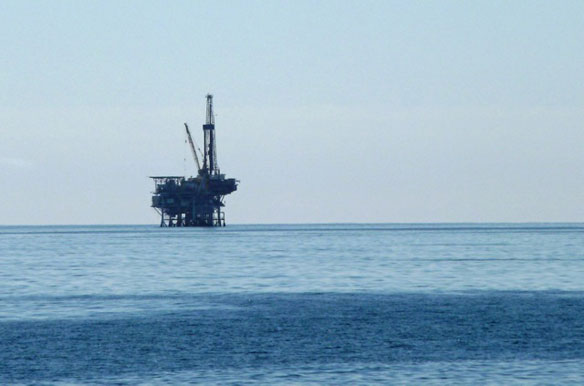
27,000 abandoned oil and gas wells in the Gulf of Mexico

Posted In Gulf Oil Catastrophe, News
Jul
9

Oil Wellhead

Photo Source: AP Photo/California State Lands Commission.
Nearshore wellhead excavated.
In this undated photo released by the California State Lands Commission, a nearshore wellhead is excavated off California. In state waters, California has resealed scores of its abandoned wells since the 1980s, but in federal waters, the official policy is out-of-sight, out-of-mind. Neither industry nor government checks for leaks at the more than 27,000 oil and gas wells abandoned in the Gulf of Mexico since the late 1940s. Abandoned wells are known sometimes to fail both on land and offshore.
It happens so often that a technical term has been coined for the repair job: ‘re-abandonment.’

By Jeff Donn and Mitch Weiss, Associated Press.

Leading environmental groups and a U.S. senator on Wednesday called on the government to pay closer attention to more than 27,000 abandoned oil and gas wells in the Gulf of Mexico and take action to keep them from leaking even more crude into water already tainted by the massive BP spill.

The calls for action follow an Associated Press investigation that found federal regulators do not typically inspect plugging of these offshore wells or monitor for leaks afterward. Yet tens of thousands of oil and gas wells are improperly plugged on land, and abandoned wells have sometimes leaked offshore too, state and federal regulators acknowledge.

Melanie Duchin, a spokeswoman with Greenpeace, said she was “shell-shocked” by the AP report and upset that government wasn’t “doing a thing to make sure they weren’t leaking.”

Of 50,000 wells drilled over the past six decades in the Gulf, 23,500 have been permanently abandoned. Another 3,500 are classified by federal regulators as “temporarily abandoned,” but some have been left that way since the 1950s, without the full safeguards of permanent abandonment.

Petroleum engineers say that even in properly sealed wells, the cement plugs can fail over the decades and the metal casing that lines the wells can rust. Even depleted production wells can repressurize over time and spill oil if their sealings fail.
Regulators at the Minerals Management Service, recently renamed the Bureau of Ocean Energy Management, Regulation and Enforcement, have routinely been accepting industry reports on well closures without inspecting the work. And no one, in industry or government, has been conducting checks on wells that have been abandoned for years.

In its investigation, the AP found a series of warnings. For instance, the General Accountability Office, which investigates for Congress, warned in 1994 that leaks from offshore abandoned wells could cause an “environmental disaster.” The report stated: “MMS does not have an overall inspection strategy for targeting its limited resources to ensuring that wells are properly plugged and abandoned.”

The GAO report suggested MMS set up an inspection program, but the agency never did.

According to a 2001 study commissioned by MMS, agency officials were “concerned that some abandoned oil wells in the Gulf may be leaking crude oil.” But nothing came of that warning.

The oil that has been gushing from a BP PLC well since an exploratory oil rig exploded April 20 is an uncomfortable reminder of the potential for leaking at abandoned wells. The well was being prepared for temporary abandonment when it blew out, setting off one of the worst environmental disasters in U.S. history.

Wells are abandoned temporarily for a variety of reasons. In the case of the BP spill, the well was being capped until a later production phase. Oil companies also may temporarily abandon wells as they re-evaluate their potential or develop a plan to overcome a drilling problem or damage from a storm. Some owners temporarily abandon wells to await a rise in oil prices.

Regulations for temporarily abandoned wells require oil companies to present plans to reuse or permanently plug such wells within a year, and then an annual review, though the AP found those rules are used to allow wells to remain “temporarily” abandoned forever.

Sen. Mark Udall, D-Colo., sent a letter Wednesday to Interior Secretary Ken Salazar asking whether regulators have authority to do inspections of abandoned wells. He said regulators may ultimately need to check industry paperwork more carefully or inspect the work itself.

“We can’t afford the leak that’s now occurring. We certainly couldn’t afford additional leaks in the future,” Udall said.
He added that there’s generally been a trust of industry, “but I think this is a case where we ought to trust, but we ought to verify.”
Environmental activists called for the government to study the extent of leaking, conduct inspections and monitor these wells over the years.

Melinda Pierce, deputy director of national campaigns for the Sierra Club, said the AP investigation shows that the government must do more to prevent another oil disaster.

“From exploration to drilling to the sealing of abandoned wells, the government must step up safety inspections and oversight to ensure that oil companies don’t cut corners that could put our marine resources and coastal economies at risk,” she said.

Derb Carter, a director with the Southern Environmental Law Center, said government inaction on abandoned wells is “not unlike the way we dealt with hazardous waste years ago where we just buried it somewhere and didn’t think about it.”

Elgie Holstein, the senior director of strategic planning for the Environmental Defense Fund’s land, water and wildlife program, said “it certainly makes sense” for the government to periodically inspect abandoned wells to ensure that they have been properly plugged. Holstein is a former U.S. Energy Department official during the Clinton administration who was on President Obama’s transition team.

After repeated requests, federal regulators acknowledged Tuesday that some abandoned wells have leaked in the past. However, a government petroleum engineer, Eric Kazanis, told the AP that abandoned wells aren’t considered a risk and aren’t “supposed to leak.”

Oil companies say they plug correctly, and that seals on properly plugged wells should last virtually forever.

Greg Rosenstein, a vice president at Superior Energy Services, a New Orleans company that specializes in this work for offshore wells, maintained that properly plugged wells “do not normally degrade.”

When pressed, though, he acknowledged: “There have been a few occasions where wells that have been plugged have to be entered and re-plugged.”

Original Article

Related Posts

Tags: ,

Post comment

Resources

Federal

  • Deep Water Horizon Response is the official site of the incident in conjunction with BP, DOI, NPS, USGS, CDC, USFWS, NOAA and other branches of the US government (collectively called Unified Command). Information, including the latest news, photos, area plans, and volunteer information.
  • NOAA is a government program that uses science and research to protect life, property and natural resources. This NOAA site provides maps of the spill and related statistics, including a trajectory forecast map for the oil spill.
  • The Environmental Protection Agency provides data on Air, Land, and Water pollutants including sampling maps and contaminant levels.

Louisiana

  • Volunteer Louisiana is the official site for the State of Louisiana to get involved in the spill response.
  • The Louisiana Department of Wildlife and Fisheries provides maps of closures to fishing areas in LA.
  • The Louisiana Emergency Office has made Google Earth files of the spill available to the public here http://gohsep.la.gov/oilspill.aspx and also has current information on general closures of waterways, photos, and reports.
  • The Audubon Nature Institute site provides a number for citizens to call if turtles, manatees, dolphins, or other animals are in distress
  • The Oiled Wildlife Care Network is a CA based non-profit is advising folks in the Gulf of Mexico on best practices and provide resources on how people can help.
  • The Coalition to Restore Coastal Louisiana is a non-profit organization who strive to protect and restore coastal Louisiana. Volunteers are needed for numerous actions including: monitoring, oiled wildlife recovery, boat driving, or simple monetary donations.
  • The Greater New Orleans Foundation is a philanthropic organization in Louisiana and the surrounding region that joins with other non-profit, foundations and community and government officials to address the needs of the community. The Foundation has opened the Gulf Coast Oil Spill Fund.
  • The Louisiana Bucket Brigade is an environmental health and justice organization working with communities near oil refineries and chemical plants. They aid residents in these regions to reduce pollution and protect public health. The Brigade has formed an incident map where you can report observed signs of oil.

Alabama

  • The Alabama Coastal Foundation is an education based organization whose mission is to project the quality of Alabama’s coastal resources. They are currently training volunteers to help directly with the spill response.
  • The site by the Alabama Governor’s Office of Faith-Based and Community Initiatives gives basic phone numbers.
  • The Mobile Bay National Estuary Program is an organization funded by the EPA fighting the environmental challenged facing Mobile Bay. This site gives e-mail addresses and phone numbers to help and provides basic information.
  • The Mobile Bay Keeper is a group of citizens who are interested in preserving the Mobile Bay watershed as well as protecting the health of the individuals and environment in the Bay. Check out the latest information about the spill and learn how to become a member and donate to the cause.

Mississippi

Florida

  • The Florida Department of Environmental Protection is the lead agency in FL and this website provides the most thorough information in the state.
  • Volunteer Florida, the website of the Governor’s Commission on Volunteerism and Community Service and the State Emergency Response Team, lists volunteer opportunities by county.
  • The Escambia County site provides summary points of actions taken by BP and FL with a focus on the County.
  • The Pinellas County site is a concise list of related local websites and numbers for information.
  • The Gulf County site has current news on the spill as it relates to the county
  • Volunteer directly with the largest wild bird hospital in the United States, the Suncoast Seabird Sanctuary.

Organizations and other networks

  • American Birding Association
  • Audubon is a global leader in protecting birds and other wildlife and their habitats. They are partnering with other organizations.
  • The Sierra Club is a grassroots environmental organization that works to protect communities, wild places, and the planet. Updates on the oil spill, as well as volunteer and donation information.
  • The Nature Conservancy is a conservation organization with a mission to preserve and protect ecologically significant lands and waters for nature and people. Learn more about the oil spill and how to help out at http://www.nature.org/wherewework/northamerica/states/alabama/features/oilspill.html and check out their blog.
  • Sea Grant is nationwide network (administered through NOAA) of 32 university-based programs that work with coastal communities on environmental stewardship and the responsible use of our coasts. The Gulf of Mexico Sea Grant Programs provides resources to educators with research that may be impacted by the spill.
  • The National Wildlife Federation is America’s largest conservation organization whose mission is to protect and restore wildlife habitat, confront global warming and connect with nature. Get the latest information on the oil spill crisis and how to help.
  • The mission of Tri-State Bird Rescue and Research is to provide rehabilitation of injured, orphaned, and oiled native wild birds to return to their natural environment. Donate to their research.
  • Green Peace is an international organization that strives to save the planet from environmental threats such as global warming, destruction of forests and deterioration of the oceans. Follow their blog and learn how to take action.
  • Global Green USA is an international environmental non-profit organization with an office in New Orleans that strives to fight global climate change, eliminate weapons of mass destruction and create clean, safe drinking water for all. Follow their blog and get involved.
  • Matter of Trust is a non-profit organization focused on materializing sustainable systems by mimicking Mother Nature as well as concentrating on manmade surplus, natural surplus and eco-educational programs. Learn very simple ways to help the oil spill crisis.
  • The official Facebook page of Unified Command.
  • BP Gulf of Mexico response.