Excerpt:
Dear EarthTalk: What is “sand mining” and why is it bad for the environment?
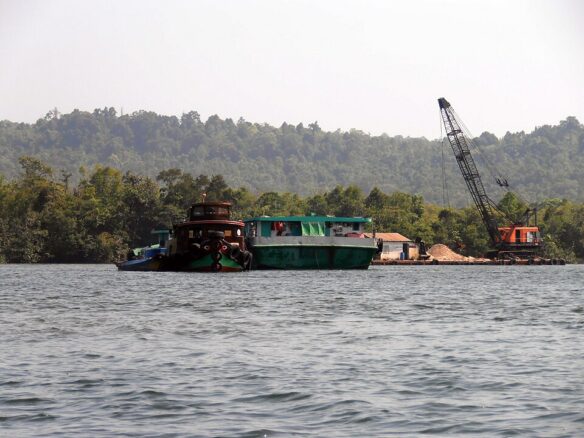
Sand mining, extracting sand from the earth, is the second most widespread human activity in marine environments, after fishing. Sand and gravel are the most extracted materials across the globe. According to the United Nations Environment Programme (UNEP), the dredging industry removes six million tons of sand from marine settings around the world each year.
Sand is typically extracted from where it’s most abundant: aquatic areas, like ocean floors. Once mined, it is incorporated into concrete, glass, electronics and asphalt, which are then used to construct buildings and houses. Although sand has many important roles in human development, it is also important for the health of ecosystems.
“This resource is often seen as an inert, abundant material, but in reality it is an essential resource that shapes coastal and marine ecosystems, protects shorelines and sustains ecosystems and livelihoods,” says Aurora Torres, a biodiversity researcher at Spain’s University of Alicante.
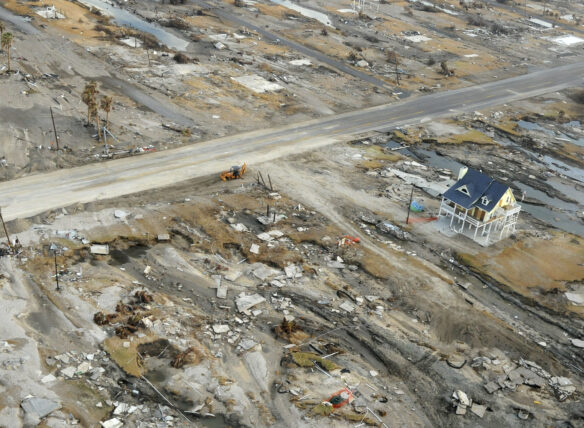
Removing sand in large amounts has negative effects on the environment. The process of dredging harms aquatic habitats by altering natural seagrass and coral while clouding the water. Sand mining has also been connected to the spread of invasive species, changes in wave patterns and coastal erosion. These issues are becoming increasingly prevalent.
“Without new thinking, the sands of time will run out…”