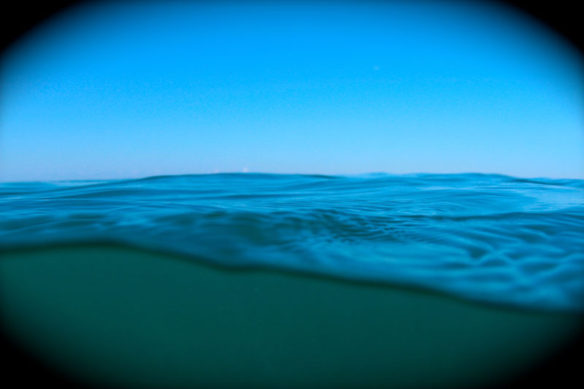
Beneath the Surface: if only it were just a nightmare

Posted In Blog, Gulf Oil Catastrophe, News
Jun
26
YouTube Preview Image

After Oceanographers, Scientists and Official recognition of underwater plumes, Undersea robot aimed for 3-D image of BP oil plume.

By Xavier Briand, Reuters.

Scientists geared up on June 16th, for a 12-day trip in the Gulf of Mexico with an undersea robot they hope will capture 3-D images of oil plumes from the BP spill.

Oceanographers and others have been monitoring the plumes of oil, gas and dispersant chemicals coming from the broken BP wellhead since soon after the April 20 explosion on the Deepwater Horizon drilling platform.

An underwater video camera shows the oil gushing from the wellhead on the sea floor, and aerial and ship observations have charted where the spill has drifted on the water’s surface.

But the exact location and the extent of oil and other chemicals in the water column have been harder to determine.

The scientists’ robotic vehicle would try to figure out how big the plume is, where it is and what it is made of, said Christopher Reddy, director of the Coastal Ocean Institute at Woods Hole Oceanographic Institution.

“The technology that we’re bringing to bear is perhaps more suited to interrogate the size, shape and chemical composition of those plumes than what traditional oceanographers have been using,” Reddy said by telephone from St. Petersburg, Florida.

The robot, called Sentry, can be put over the side of a research vessel for 14 to 18 hours at a time, with a mass spectrometer that can “sniff for oil,” Reddy said.

Circling The Plume

Unlike robotic vehicles that are directed remotely by computer, Sentry can change course by itself, like a bloodhound following a scent, to track oil, gas or other hydrocarbons leaking from the sea bottom, Reddy said.

The Sentry AUV (autonomous underwater vehicle) is on the research vessel Endeavor, a 184-foot (56-meter) oceanographic ship owned by the U.S. National Science Foundation and operated by the University of Rhode Island.

Reddy is among some 30 scientists and crew set off from the Florida Gulf coast for the area near the spill, focusing on the so-called southwest plume that has been seen about 20 miles south of the wellhead.

Instead of sensors dropped over the side of boats almost like fishing lines, which can observe only a small portion of the plume, Sentry would move around on its own to circle the oil, move up and down or go through it.

“At the end of the day, we’ll have a three-dimensional, almost holographical image of the plume,” Reddy said.

Original Article

National Science Foundation Article


Beneath The Surface

OIL PLUME EXPLAINED
By Donald Reinhardt, Professor of Georgia State University in Atlanta, Georgia.

“Oil and water don’t mix” but “oil and water and dispersants do mix” and then large underwater oil plumes will exist and wreak havoc wherever they go.

The BP Gulf of Mexico oil spill of April 20, 2010 at the Deepwater Horizon Rig in Mississippi Canyon 252 is a historic, economic, environmental, engineering and scientific event of major significance. The spill is already one of the greatest man-made and natural disasters in American history with hundreds of thousands gallons of Louisiana crude streaming daily into the Gulf waters from one mile below. Deepwater Horizon is an ongoing story that involves: an exploded oil rig, 11 dead workers, a damaged riser pipe, multiple attempts by robots to control and cap the damaged pipe and BOP (Blow Out Protector), oil contamination of living and non-living things, and underwater oil plumes.

Oil, Water and Oil Dispersants Mix Well
Oil dispersants are useful to separate or dissociate large masses of oil into smaller patches. The EPA has approved 18 different dispersant products for oil spill situations similar to BP’s Deepwater Horizon spill in the Gulf of Mexico.

BP is using Nalco’s COREXIT dispersant at the damaged BOP site. Here escaping oil actively mixes with BP’s pumped-down dispersant about 5000 feet below the Gulf’s water surface. The oil and dispersant interact with the saltwater to form a oil-dispersant-water combination or mixture. The complex oil-dispersant-water mixture is too heavy to float completely upward, but not heavy enough to sink down to the bottom. Therefore, the oil plume remains in the water column.

Any oil that floats to the surface has not mixed with dispersant or has separated from the dispersant. Floating oil has a lower density than water. This oil remains on the surface unless a dispersant is dropped onto the oil by aircraft or from dispersant boats . When this is done the oil will sink below the surface.

Oil Plumes are Oil-Dispersant-Water Mixtures
Despite protestations from some (BP), oil plumes are very real. These oil plumes have been independently observed and proven to exist. Forensic oil and dispersant chemical analyses of different Gulf oil plume samples can reveal the true nature and source of these documented oil plumes. Jane Lubchenko, Head of NOAA, held a briefing in Washington (Npr.org) and confirmed that one oil plume, some 3000 feet deep and 40 miles northeast of the Deepwater Horizon drill site, represents oil from the BP rig accident.

Oil plumes are made even more real when there are large masses of oil mixed deep down in the water with massive amounts of dispersants as has occurred in the BPO oil spill of 2010. These oil plumes can migrate and be carried far and wide by various underwater currents.

What Happens to Oil Plumes?
As plumes travel within water columns they tend to separate or dissemble into smaller and smaller pieces or fragments. Various plumes that form are complex combinations of different amounts and types of the original crude oil, saltwater and dispersant. Some of the oil breaks free of dispersant and floats to the surface. Some of the plume mixture attaches to living seaweed, phytoplankton, zooplankton, fish, shrimp and other life forms.

Some of the plume mixture attaches to dead organic matter such as submerged wood, dead animals and plants. Some of this oil complex settles downward toward the bottom of the Gulf and other portions of oil and oil-dispersant move to beaches, marshes and waterways where they make landfall. Some of the smaller plume combinations are digested by microbes. Some of the plume complex is ingested by crabs, shrimp, and fish. Some contaminated fish may be eaten by pelicans, gulls and other Gulf birds.

Original Article

More On What is an oil plume?

How does the oil plume looks like? in Washington Post

Recent Tests confirm spreading of plume, in NY Times

Related Posts

Tags: ,

Post comment

Resources

Federal

  • Deep Water Horizon Response is the official site of the incident in conjunction with BP, DOI, NPS, USGS, CDC, USFWS, NOAA and other branches of the US government (collectively called Unified Command). Information, including the latest news, photos, area plans, and volunteer information.
  • NOAA is a government program that uses science and research to protect life, property and natural resources. This NOAA site provides maps of the spill and related statistics, including a trajectory forecast map for the oil spill.
  • The Environmental Protection Agency provides data on Air, Land, and Water pollutants including sampling maps and contaminant levels.

Louisiana

  • Volunteer Louisiana is the official site for the State of Louisiana to get involved in the spill response.
  • The Louisiana Department of Wildlife and Fisheries provides maps of closures to fishing areas in LA.
  • The Louisiana Emergency Office has made Google Earth files of the spill available to the public here http://gohsep.la.gov/oilspill.aspx and also has current information on general closures of waterways, photos, and reports.
  • The Audubon Nature Institute site provides a number for citizens to call if turtles, manatees, dolphins, or other animals are in distress
  • The Oiled Wildlife Care Network is a CA based non-profit is advising folks in the Gulf of Mexico on best practices and provide resources on how people can help.
  • The Coalition to Restore Coastal Louisiana is a non-profit organization who strive to protect and restore coastal Louisiana. Volunteers are needed for numerous actions including: monitoring, oiled wildlife recovery, boat driving, or simple monetary donations.
  • The Greater New Orleans Foundation is a philanthropic organization in Louisiana and the surrounding region that joins with other non-profit, foundations and community and government officials to address the needs of the community. The Foundation has opened the Gulf Coast Oil Spill Fund.
  • The Louisiana Bucket Brigade is an environmental health and justice organization working with communities near oil refineries and chemical plants. They aid residents in these regions to reduce pollution and protect public health. The Brigade has formed an incident map where you can report observed signs of oil.

Alabama

  • The Alabama Coastal Foundation is an education based organization whose mission is to project the quality of Alabama’s coastal resources. They are currently training volunteers to help directly with the spill response.
  • The site by the Alabama Governor’s Office of Faith-Based and Community Initiatives gives basic phone numbers.
  • The Mobile Bay National Estuary Program is an organization funded by the EPA fighting the environmental challenged facing Mobile Bay. This site gives e-mail addresses and phone numbers to help and provides basic information.
  • The Mobile Bay Keeper is a group of citizens who are interested in preserving the Mobile Bay watershed as well as protecting the health of the individuals and environment in the Bay. Check out the latest information about the spill and learn how to become a member and donate to the cause.

Mississippi

Florida

  • The Florida Department of Environmental Protection is the lead agency in FL and this website provides the most thorough information in the state.
  • Volunteer Florida, the website of the Governor’s Commission on Volunteerism and Community Service and the State Emergency Response Team, lists volunteer opportunities by county.
  • The Escambia County site provides summary points of actions taken by BP and FL with a focus on the County.
  • The Pinellas County site is a concise list of related local websites and numbers for information.
  • The Gulf County site has current news on the spill as it relates to the county
  • Volunteer directly with the largest wild bird hospital in the United States, the Suncoast Seabird Sanctuary.

Organizations and other networks

  • American Birding Association
  • Audubon is a global leader in protecting birds and other wildlife and their habitats. They are partnering with other organizations.
  • The Sierra Club is a grassroots environmental organization that works to protect communities, wild places, and the planet. Updates on the oil spill, as well as volunteer and donation information.
  • The Nature Conservancy is a conservation organization with a mission to preserve and protect ecologically significant lands and waters for nature and people. Learn more about the oil spill and how to help out at http://www.nature.org/wherewework/northamerica/states/alabama/features/oilspill.html and check out their blog.
  • Sea Grant is nationwide network (administered through NOAA) of 32 university-based programs that work with coastal communities on environmental stewardship and the responsible use of our coasts. The Gulf of Mexico Sea Grant Programs provides resources to educators with research that may be impacted by the spill.
  • The National Wildlife Federation is America’s largest conservation organization whose mission is to protect and restore wildlife habitat, confront global warming and connect with nature. Get the latest information on the oil spill crisis and how to help.
  • The mission of Tri-State Bird Rescue and Research is to provide rehabilitation of injured, orphaned, and oiled native wild birds to return to their natural environment. Donate to their research.
  • Green Peace is an international organization that strives to save the planet from environmental threats such as global warming, destruction of forests and deterioration of the oceans. Follow their blog and learn how to take action.
  • Global Green USA is an international environmental non-profit organization with an office in New Orleans that strives to fight global climate change, eliminate weapons of mass destruction and create clean, safe drinking water for all. Follow their blog and get involved.
  • Matter of Trust is a non-profit organization focused on materializing sustainable systems by mimicking Mother Nature as well as concentrating on manmade surplus, natural surplus and eco-educational programs. Learn very simple ways to help the oil spill crisis.
  • The official Facebook page of Unified Command.
  • BP Gulf of Mexico response.