Excerpt:
Rising sea temperatures mean reefs don’t have enough time to bounce back between intense heat waves, a new report warns…
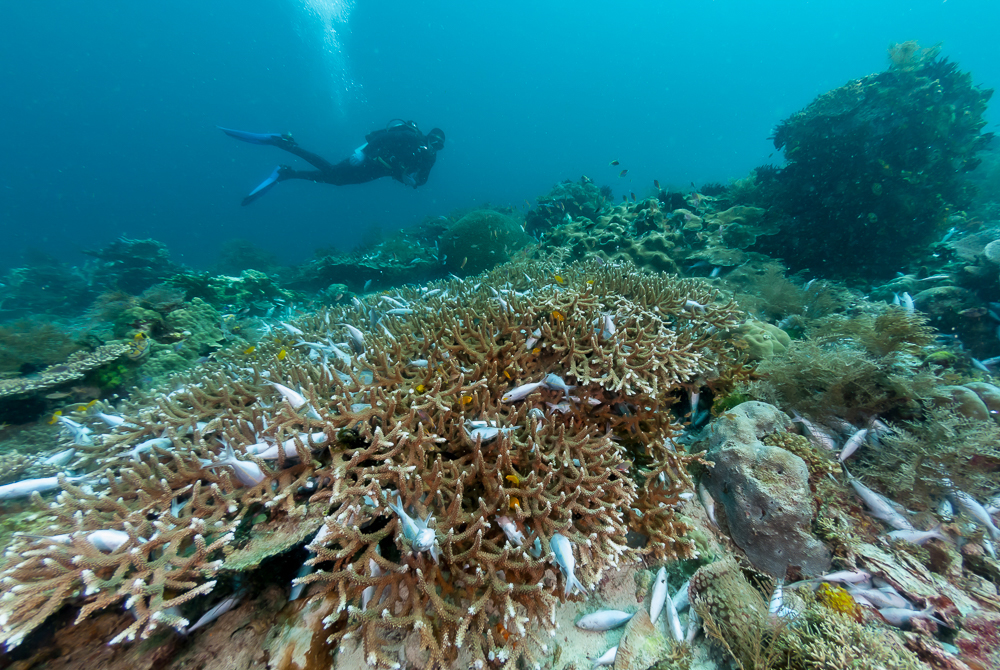
Coral reefs around the world, struggling as climate change drives more frequent and more intense marine heat waves, are running out of time for recovery, according to a sweeping new report on the state of the world’s corals published on Monday.
The comprehensive global assessment builds on decades of research and coral monitoring, and highlights the devastating effects of warming on one of Earth’s most delicate and diverse ecosystems.
It found that the world’s coral reefs had declined by 9.5 percent in the period from 2020 to 2024, compared with 1980 to 2009. The largest single-year coral decline on record, which affected 87 percent of reefs worldwide, occurred in 2024.
But perhaps the most alarming finding is that reefs, which protect coastlines from storms and support at least a quarter of marine life at some point in their life cycles, now have a much narrower window for recovery.
Historically, global coral bleaching events have happened roughly once per decade. But since 2010, they’ve occurred every four to six years, according to the report.
Bleaching occurs when corals become so stressed that they lose the symbiotic algae they need to survive. Bleached corals can recover, but they need time to do so. If the water surrounding them is too hot for too long, they die.
The findings are “dire and serious,” said Manuel Gonzalez-Rivero, a researcher at the Australian Institute of Marine Science and the report’s lead author. Corals, he said, are no longer experiencing the natural ebb and flow of stress and recovery.
“Coral reefs take quite a long time to recover,” he said. “We’re talking about decades to actually regain back what they lost…”