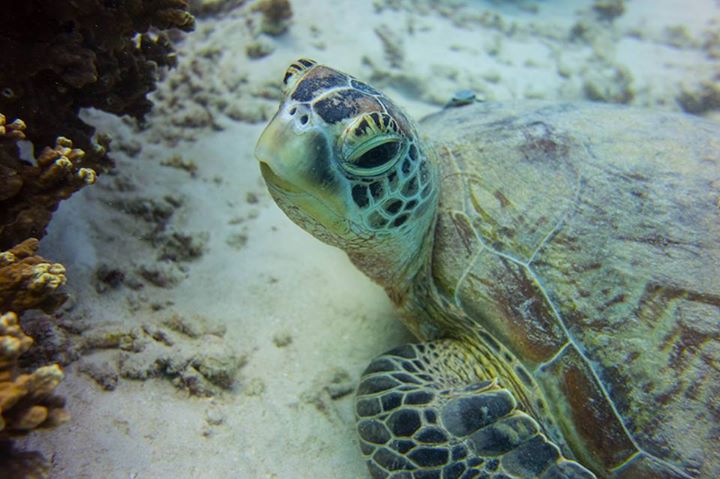
“There’s this beautiful underwater garden out there,” says Mercy Singleton, referring to the vast network of colorful corals that make up the Great Barrier Reef off eastern Australia’s Queensland coast. “We’d like to see it safe and recovering…”
Singleton is Yirrganydji and director of Research and Engagement Services at Dawul Wuru Aboriginal Corporation. Her people are one of 18 Traditional Owner groups helping steward the Great Barrier Reef, for them their Sea Country — with Traditional Use of Marine Resources Agreements (TUMRAs) in hand. These community-based plans for joint management of the Reef are part of a suite of conservation efforts at the iconic World Heritage Site that include Traditional Owners in management.
While there are still gaps in the full inclusion of Indigenous communities in the stewardship of their traditional waters, big strides are being made, say Indigenous governance organizations and scientists. A recent decision by the World Heritage Committee has taken notice.
“The last 30 years have seen massive changes in how the Great Barrier Reef is managed, particularly for Traditional Owners,” says Allan Dale, professor of tropical regional development at James Cook University.
“There’s been this great increase in the governing capability and the ability of those Traditional Owner groups to achieve their aspirations,” he tells Mongabay. “There’s been a real huge growth in the sort of capability of land and sea reservations and there’s an increasing number of rangers and leaders and planners and workers in that space.”
Recent funding expanded to support over 200 Indigenous rangers and partnerships with Traditional Owner groups along the coast, from field activities and water-quality monitoring, have risen in the last few years.
In late July 2026, the World Heritage Committee again decided not to add the Great Barrier Reef to its “in danger” list. Yet, while the committee’s previous decision in 2021 made no mention of Traditional Owners, now the committee is encouraging the Australian and Queensland Government to “support the Traditional Owner Taskforce”, a 2024 initiative led by Traditional Owners to assert their right to manage and have authority over Sea Country, and to “lead the delivery of the Reef 2050 Traditional Owner Implementation Plan”, a guide to build on past Indigenous-led work to make tangible, positive changes to the Reef.
Noting the continued threats of coral bleaching, poor water quality, invasive species and climate change on the reef, the committee commended Australia on two items: increased efforts toward sustainable fishing and Traditional Owner management.
This wasn’t always the case…