Excerpt:
For coastal Indigenous communities in American Samoa, giant clams are deeply rooted in fa‘a Sāmoa (the Samoan way of life) and local food systems.
The authors examined giant clam population trends, clam densities and distributions, and species composition across six islands — Tutuila, Aunuʻu, Ofu, Olosega, Taʻū and Muliāva — from 1994/5 to surveys conducted between 2022-24. While the highly populated island of Tutuila had the lowest clam densities with 83.5 individuals per hectare (33.8 per acre), remote islands like Taʻū and Muliāva showed higher densities up to 812 to 1,166 per hectare (328 to 471 per acre).
On Tutuila, which had multiple types of management zones, subsistence and remote sites had the highest densities of giant clams, followed by remote areas, then village protected areas. Federal no-take sites held the lowest mean density of clams overall on the island.
“By restoring local stewardship, cultural accountability, and respect for customary marine tenure values, community-led systems like fa‘asao have strengthened marine ecosystem conservation through village-based fishery closures,” Dimary Ulberg, an Indigenous Samoan and program manager of the Community-based Fisheries Management Program (CBFMP) at the Department of Marine and Wildlife Resources (DMWR), said by email.
Empowering traditional community stewardship, the study suggested, can offer a viable alternative to federal restrictions — especially in areas communities rely on for clam harvesting — while respecting traditional management practices in American Samoa.
“Some of the results were surprising,” Paolo Marra-Biggs, the lead author of the study and a PhD candidate at the University of Hawaiʻi at Mānoa, told Mongabay by email.
“Despite the global decline of giant clams, we found that some areas in American Samoa [Tutuila, Taʻū and Muliāva] still supported strong populations, especially where harvest pressure was low or where communities actively managed their reefs,” he said.
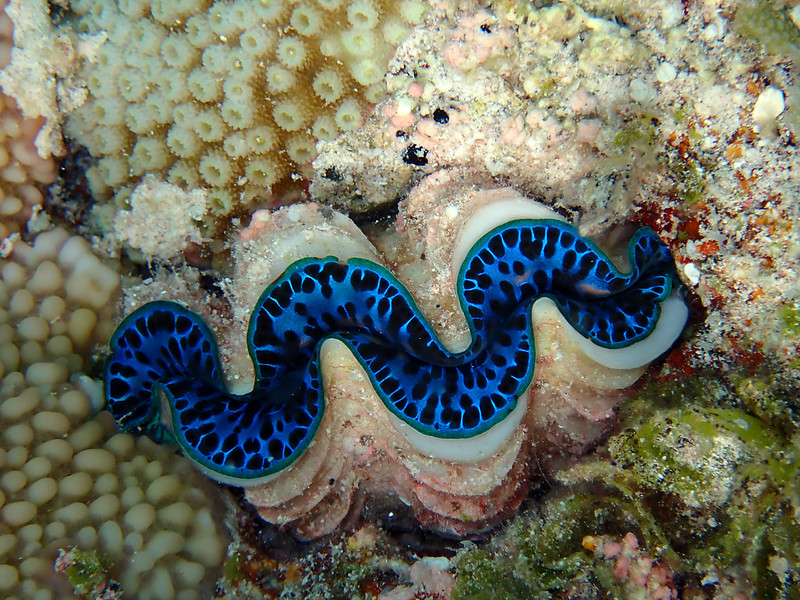
The maxima clam (Tridacna maxima) had the most dominant population, while small populations of the fluted giant clam (T. squamosa) and Noah’s giant clam (T. noae) were primarily located in village-managed areas.
“Many island villages manage their own protected reef areas called fa‘asao, and we saw a strong effect of village stewardship on the conservation of giant clams,” Marra-Biggs said.
Certain nearshore waters are under the jurisdiction of Indigenous Samoan communities through CBFMP — a co-management approach between the village community and the DMWR to protect marine resources. Under the program, communities establish their own terms and commitment periods for fishery restrictions. Not all village-based management areas are under the CBFMP program, though.
Aligned with the customary marine tenure values guided by the Samoan governance, Ulberg said villages establish their own closure terms through consensus among matai (village chiefs) and community members.
“They set timelines, species, and fishing gear restrictions that help manage and rebuild fish stocks, habitats, and ecosystems over time while implementing the community’s local and traditional ecological knowledge,” she told Mongabay.
In terms of sustainable conservation impact, she argued that village-based protection can be more effective than federal no-take zones as compliance is culturally internalized, which help encourage long-term behavioral change.
“Village-based closures often reflect the community’s collective values, traditional leadership aligned with subsistence priorities and cultural values,” she told Mongabay. Compliance is thus aligned with culture, which helps encourage long-term behavioral change and community buy-in…